

Which Non Mercury Slip Ring is Safe?
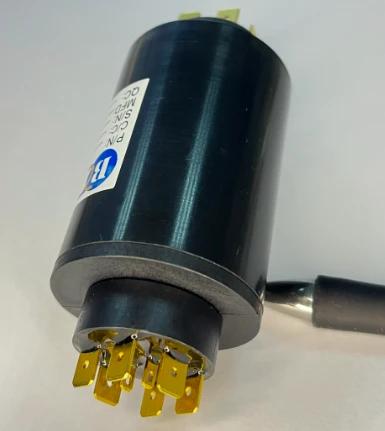
Gallium-based liquid metal slip rings and precious metal contact slip rings are the safest non-mercury slip ring options available today. Both technologies eliminate mercury toxicity risks while maintaining reliable electrical connections in rotating machinery. The choice between them depends on your application requirements, regulatory environment, and performance needs.
Understanding Non Mercury Slip Ring Technology
Traditional mercury slip rings dominated industrial applications for decades due to their exceptional conductivity and minimal maintenance requirements. However, mercury's classification as a toxic substance and increasing regulatory restrictions have driven the development of non-mercury alternatives.
The safety question isn't simply about removing mercury-it's about finding replacements that match performance without introducing new hazards. Meridian Laboratory spent five years developing non-mercury brushless solutions that achieved over 500 million revolutions while delivering performance equal to mercury-wetted connectors.
Gallium-Based Liquid Metal Slip Rings
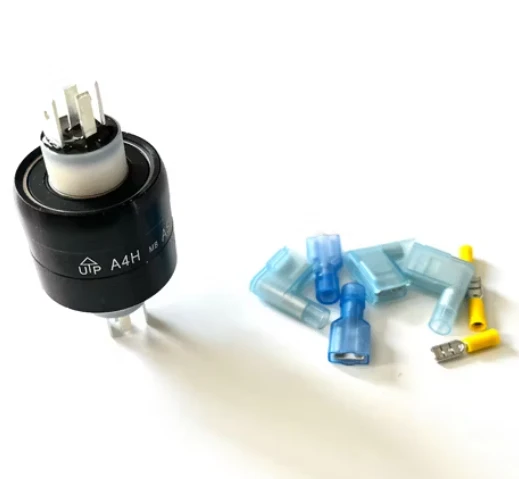
Gallium-based slip rings use gallium-indium alloy as the conductive medium instead of mercury, eliminating toxicity concerns while maintaining liquid metal advantages. This technology represents the most direct mercury replacement for brushless applications.
Safety Profile
The gallium-indium alloys used in these slip rings are non-toxic and pose no significant health risks with proper handling. Unlike mercury, which releases toxic vapors at room temperature, gallium alloys remain safely contained within sealed housings.
All major manufacturers offer gallium-based slip rings with CE and RoHS compliance certifications, confirming they meet European Union safety and environmental standards. This compliance eliminates the regulatory complications associated with mercury devices, making non mercury slip ring adoption straightforward for regulated industries.
Performance Characteristics
Gallium-based fluid metal slip rings achieve service life exceeding 1 billion revolutions due to minimal mechanical wear. The liquid metal characteristic ensures:
Contact resistance below 1 milliohm
Zero arc generation during transmission
Stable signal transmission without interference
Minimal electrical noise
Operating speeds up to 1000 RPM
However, gallium-based liquid metal is less adhesive than mercury on silver-plated conductors, making these slip rings more sensitive to vibration and shock. Light vibrations can cause the liquid metal to migrate between chambers, potentially creating short circuits. This limitation makes them less suitable for high-vibration environments compared to mercury alternatives.
Approved Applications
Gallium-based slip rings are specifically suitable for food, medical, and pharmaceutical industries where mercury contamination risks cannot be tolerated. Their non-toxic composition allows use in:
Food processing equipment
Pharmaceutical manufacturing machinery
Medical devices and surgical equipment
Automated production lines in hygiene-sensitive industries
Packaging machinery for consumables
Precious Metal Contact Slip Rings
Traditional brush-and-ring slip rings using precious metal contacts represent the oldest and most widely accepted safe alternative. Industry experts recommend precious metal contacts as the primary choice for food manufacturing, pharmaceutical equipment, and any application where contamination poses serious threats.
Material Safety
Precious metal slip rings typically use gold, silver, or gold-plated copper for both the rings and brush contacts. These materials are:
Chemically inert and non-toxic
FDA-compliant for food contact applications
Resistant to oxidation and corrosion
Safe for human exposure in industrial settings
The brushes may use carbon, graphite, or fiber materials, all of which are non-hazardous when properly contained.
Performance Trade-offs
While precious metal slip rings eliminate toxicity risks, they operate on different principles than liquid metal designs:
Advantages:
Proven reliability across decades of industrial use
No special handling requirements
Simple maintenance procedures
Lower initial cost for low-current applications
No leakage risk
Limitations:
Higher electrical resistance (10-20 milliohms vs. less than 1 milliohm for liquid metal)
Mechanical wear requires periodic brush replacement
Shorter operational life (tens of millions vs. billions of revolutions)
Higher electrical noise in some applications
Debris generation from brush wear

Fiber Brush Technology
Fiber brush slip rings use bundles of conductive micro-fibers that flex and move against rotating metal rings, maintaining electrical contact without the friction and wear of traditional metal brushes. This design makes fiber brush technology a reliable non mercury slip ring option for precision applications.
Safety Advantages
Fiber brush technology offers several safety benefits:
No toxic materials in construction
Minimal debris generation compared to carbon brushes
Reduced contamination risk in clean environments
Lower operating temperatures
No liquid components that could leak
Manufacturers like Moog developed patented fiber brush designs that produce virtually no debris, eliminating downtime for brush changes and protecting units from debris contamination.
Application Suitability
Fiber brush slip rings excel in applications requiring:
High-speed data transmission
Low electrical noise
Extended maintenance intervals
Clean room environments
Moderate power transmission
They're particularly effective in robotics, renewable energy equipment, and precision instrumentation where signal integrity matters more than maximum current capacity.

Wireless (Inductive) Slip Rings
Wireless slip rings transfer power and data via magnetic fields created by coils in the rotating receiver and stationary transmitter, eliminating all physical contact.
Ultimate Safety Profile
Wireless technology provides the highest safety level by eliminating:
All conductive liquids
Mechanical wear components
Toxic materials
Physical contact points
Contamination pathways
The wireless approach reduces mechanical contact and maintenance requirements, making it ideal for harsh and specific environments.
Power Limitations
The primary constraint is power capacity. Traditional contact-type slip rings can transmit orders of magnitude more power in the same volume compared to wireless designs. This limitation restricts wireless slip rings to:
Low to moderate power applications
High-priority signal transmission
Environments where maintenance access is extremely limited
Applications where contamination risk outweighs power needs
Industry-Specific Safety Considerations
Food and Beverage Applications
For food manufacturing and processing, precious metal contacts are the primary recommended choice due to safety requirements. Slip rings in this sector must use food-grade materials, resist corrosion, and comply with FDA regulations. Any non mercury slip ring deployed in food contact zones requires documentation proving material safety and compliance with FDA 21 CFR standards.
Acceptable options:
Precious metal contact slip rings (gold, silver)
Gallium-based liquid metal slip rings with proper sealing
Fiber brush designs with food-grade housings
IP-rated and easy-to-clean slip rings help meet hygiene and washdown requirements in food processing.
Medical and Pharmaceutical Equipment
Similar to food applications, medical equipment demands non-toxic materials and stringent contamination controls. Gallium-based slip rings specifically target this market due to their non-toxic composition and RoHS compliance.
Medical device slip rings must also meet:
EMC (electromagnetic compatibility) standards
Medical safety certifications
Sterilization compatibility requirements
Biocompatibility standards where applicable
Industrial and Manufacturing
For general industrial applications without direct human contact or food/pharmaceutical proximity, the safety requirements expand to include:
Precious metal contact designs
Gallium-based liquid metal slip rings
Fiber brush technology
Wireless systems for specialized needs
Meridian Laboratory's RoHS/CE compliant non-mercury brushless solutions serve heavy-duty continuous industrial environments with configurations supporting up to 10,000 amps and 40,000 RPM.
Regulatory Compliance and Certifications
RoHS and CE Compliance
RoHS (Restriction of Hazardous Substances) Directive restricts mercury use in electrical and electronic equipment, driving the need for compliant alternatives. Mercury-containing Mercotac connectors are often exempted for industrial applications under RoHS, but these exemptions are narrowing. Safe non mercury slip ring designs eliminate exemption requirements entirely.
Safe non-mercury slip rings should carry:
RoHS compliance certification
CE marking (for European markets)
Declaration of Conformity documentation
Material safety data sheets
FDA Requirements
For food contact applications, verify that slip ring materials comply with:
FDA 21 CFR 177.2600 (rubber and plastics)
NSF/ANSI standards for food equipment
USDA acceptance where applicable
Environmental Considerations
The EU Regulation 2017/852 implementing the Minamata Convention on Mercury restricts mercury-containing products. Choosing non-mercury alternatives from the start avoids:
Future regulatory compliance issues
Disposal complications
Liability concerns
Insurance premium increases
Selecting the Right Non Mercury Slip Ring
Application Environment
Clean/Food-Safe Required:
First choice: Precious metal contacts
Alternative: Gallium-based with appropriate sealing
High Vibration:
First choice: Precious metal contacts or fiber brush
Avoid: Gallium-based liquid metal
Maintenance-Sensitive:
First choice: Gallium-based liquid metal or wireless
Second choice: Fiber brush
Last resort: Traditional carbon brush
Electrical Requirements
High Current (>10A):
Precious metal multi-circuit designs
Gallium-based liquid metal (parallel circuits)
Low Noise/High Frequency:
Fiber brush technology
Wireless for signal transmission
Note: Mercury/gallium slip rings cannot effectively transfer high-frequency signals like Ethernet
Maximum Reliability:
Gallium-based for maintenance-free operation
Redundant precious metal circuits for critical applications
Cost Considerations
Initial cost ranking (low to high):
Standard precious metal brush designs
Fiber brush technology
Gallium-based liquid metal
Wireless/inductive systems
However, total lifecycle cost often favors liquid metal or fiber brush designs due to reduced maintenance requirements and longer operational life.
Installation and Handling Safety
Gallium-Based Slip Rings
Store at temperatures above 8°C (46°F); if rotation becomes difficult after storage below this temperature, warm the unit above 50°C (122°F) to restore proper function.
Installation precautions:
Protect from shock and vibration during installation
Ensure proper alignment to prevent liquid metal migration
Verify sealing integrity before operation
Follow manufacturer temperature guidelines
Precious Metal Designs
Standard electrical safety practices apply:
De-energize before maintenance
Follow torque specifications for mounting
Inspect brushes periodically for wear
Replace brushes in complete sets
Fiber Brush Systems
Avoid over-tightening during installation
Protect fiber assemblies from contamination
Verify proper spring tension
Follow manufacturer break-in procedures
Long-Term Safety Performance
Operational Lifespan
Non-mercury liquid metal slip rings achieve service life exceeding 1 billion revolutions, compared to traditional brush designs requiring replacement after tens of millions of revolutions.
Expected lifespans:
Gallium-based liquid metal: 500 million to 1+ billion revolutions
Fiber brush: 100-500 million revolutions
Precious metal carbon brush: 10-50 million revolutions
Wireless: Indefinite (no wear components)
Maintenance Requirements
Gallium-based: Essentially maintenance-free; periodic inspection for seal integrity.
Precious metal: Brush replacement at scheduled intervals; annual cleaning and inspection.
Fiber brush: Minimal; inspect every 50-100 million revolutions.
Wireless: No contact maintenance; verify electronic components.
Failure Modes
Understanding failure characteristics helps assess safety:
Liquid metal designs: Seal degradation could cause leakage, but gallium alloys pose minimal toxicity risk compared to mercury.
Brush designs: Gradual performance degradation provides warning before complete failure.
Wireless: Electronic component failure; no mechanical breakdown risk.
Frequently Asked Questions
Are gallium-based slip rings as safe as precious metal designs?
Yes, for most applications. Gallium-indium alloys are non-toxic and present no significant safety hazards with proper handling. They're approved for food and medical applications where mercury is prohibited.
Can non-mercury slip rings match mercury performance?
Non-mercury brushless solutions now deliver performance equal to mercury-wetted connectors, achieving over 500 million revolutions. However, gallium-based designs have lower vibration resistance compared to mercury types.
What's the safest slip ring for food processing equipment?
Precious metal contacts are recommended as the primary choice for food manufacturing due to FDA compliance and zero contamination risk. Properly sealed gallium-based slip rings certified for food contact also work well.
Do all non-mercury slip rings have RoHS certification?
Not automatically. Verify that specific models carry RoHS/CE compliance documentation. Reputable manufacturers provide CE and RoHS compliance for their gallium-based product lines.
Manufacturer Verification
When sourcing safe non-mercury slip rings:
Request documentation: RoHS certificates, material declarations, safety data sheets
Verify certifications: CE marking, FDA compliance where applicable
Check application approvals: Industry-specific certifications
Review testing: Lifespan testing, environmental testing results
Confirm traceability: Manufacturing standards, quality control processes
Established manufacturers like Meridian Laboratory have developed and tested non-mercury solutions specifically to meet RoHS/CE requirements while maintaining industrial performance standards.
Making the Safe Choice
The safest non-mercury slip ring depends on your specific application:
For food/pharmaceutical/medical: Precious metal contacts or certified gallium-based liquid metal designs provide the highest safety assurance.
For high-vibration environments: Precious metal or fiber brush technology offers better reliability than gallium-based alternatives.
For maximum lifespan with minimal maintenance: Gallium-based liquid metal slip rings deliver the best performance-to-maintenance ratio.
For signal-critical applications: Fiber brush or wireless designs minimize electrical noise.
All properly manufactured non-mercury slip ring technologies eliminate the primary toxicity concerns of mercury while meeting modern safety and environmental standards. The key is matching the specific technology to your application requirements, operating environment, and regulatory obligations.
Priority should be verifying manufacturer certifications, understanding application-specific safety requirements, and selecting designs that provide appropriate performance margins for your critical parameters-whether that's current capacity, signal integrity, maintenance intervals, or contamination prevention. Transitioning to a properly specified non mercury slip ring eliminates regulatory concerns while maintaining or improving operational performance.