

Introduction
If you want to purchase high-quality slip ring products, the first step is to choose a reputable slip ring manufacturer. A manufacturer's reputation reflects their track record in delivering reliable products, maintaining quality standards, and providing support throughout the product lifecycle. Here is a practical guide to evaluating the reputation of slip ring manufacturers.
Key Factors Affecting a Slip Ring Manufacturer's Reputation
When choosing a reputable slip ring manufacturer, it is important to consider the following key factors:
1. Industry Experience & Specialization
Extensive operational experience reflects a company's stability and technical expertise. For example, SCHLEIFRING has over 50 years of market experience, while Beyond Gravity has achieved a 100% mission success rate in aerospace applications with a cumulative flight time of 2,000 hours, demonstrating strong professional capability.
2. Quality Certifications
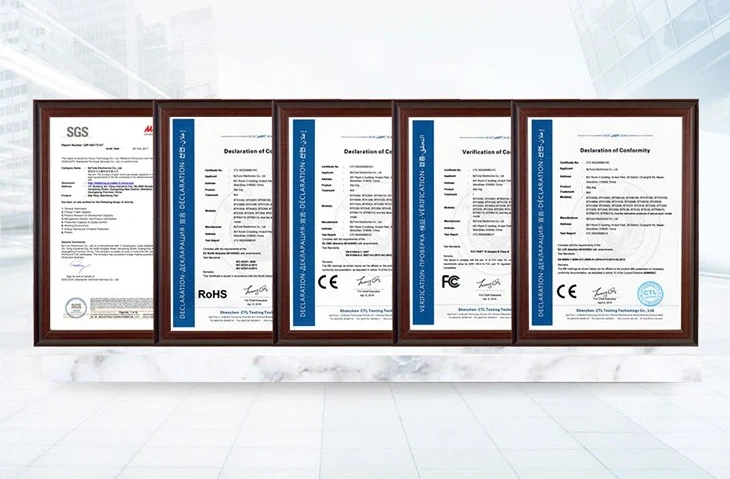
Certifications such as ISO 9001, CE, ISO 14001, and ISO 45001 indicate that a manufacturer adheres to high standards in quality management, environmental management, and occupational health and safety. Manufacturers with multiple certifications typically implement strict standards for material inspection, production control, and final testing.
3. Testing & Performance Standards
Professional manufacturers conduct rigorous tests, including contact resistance, dielectric strength, and mechanical life-cycle testing. Investment in high-precision testing equipment-such as resistance fluctuation detection systems with over one million samples per second-demonstrates a strong commitment to product performance and reliability.
4. Material Selection & Manufacturing Process
High-end manufacturers use premium materials such as silver rings, gold-gold contacts, graphite and silver brushes, stainless steel, and aluminum alloys. Material quality and manufacturing processes directly impact electrical noise, wear resistance, and signal integrity, reflecting the company's technical level and commitment to product performance.
Customer Service and Technical Support Quality
Customer service and customization capabilities are key indicators of a slip ring manufacturer's reputation.
• Technical Support: Fast and professional technical consultation helps reduce downtime and addresses installation or specification adjustment issues.
• Customization Capabilities: The ability to adjust hole size, circuit count, current/voltage ratings, shielding, IP protection, or military-grade structures demonstrates engineering strength and flexibility.
• Delivery Efficiency: Manufacturers with a large standard product inventory can quickly modify designs, balancing fast standard delivery with optimized custom performance.
• Warranty and Maintenance: Basic products typically offer 30–90 days of warranty, high-end products 1–2 years, and some medical equipment suppliers provide 3–5 years or refurbishment services to extend product life and reduce total cost of ownership.
Red Flags When Evaluating a Slip Ring Manufacturer
The following are key red flags to consider:
• Vague Performance Specifications: Claims such as "ultra-long lifespan" or "high-speed" without specific test data or operating conditions lack credibility.
• Lack of Certifications: Manufacturers claiming aerospace or military-grade capabilities without AS9100/military certifications, or products intended for hazardous environments without ATEX/IECEx/UL certification, are a warning sign.
• Incomplete Technical Documentation: Absence of detailed drawings, material specifications, electrical characteristics, or installation guides indicates insufficient engineering rigor.
• Poor Pre-Sales Communication: Inability to understand application requirements or provide reasonable recommendations during inquiry may predict future issues with after-sales support.
How to Verify Manufacturer Claims
Before purchasing, verify the slip ring manufacturer's claims. Key methods include:
1. Third-Party Verification: Membership in industry associations, participation in standards committees, or recognition in peer-reviewed journals can demonstrate credibility within the industry.
2. On-Site Factory Visits: Touring production lines, testing labs, and inventory management systems allows you to directly assess the manufacturer's capabilities.
3. Sample Testing: Requesting prototypes for real-world application testing helps verify electrical noise, contact resistance, mechanical smoothness, and environmental adaptability.
4. Customer References: Feedback from existing clients in similar applications provides insight into delivery reliability, technical support quality, and long-term product performance.
Industry-Specific Considerations
Different applications place varying demands on a slip ring manufacturer's reputation. Key considerations by industry include:
• Aerospace and Defense: Extremely high reliability is critical, as product failure can lead to catastrophic consequences.
• Medical Equipment: Signal integrity and regulatory compliance are top priorities, especially in high-speed data transmission environments.
• Industrial Automation: Focuses on cost-effectiveness, availability, and fast delivery rather than extreme performance.
• Wind Energy: Requires high IP protection, corrosion resistance, and long maintenance intervals to withstand offshore environments and heavy vibration.
Conclusion
Evaluating a slip ring manufacturer's reputation requires considering experience, certifications, testing standards, materials, and customer support, while watching for warning signs. Different industries have unique requirements, so choose a manufacturer that best fits your application.
ByTune: Professional Slip Ring Manufacturer
ByTune, a professional slip ring design and manufacturing company, offers a wide range of high-performance slip ring products and can provide customized designs tailored to customer requirements. Our team also delivers comprehensive technical support to help clients address various challenges. Contact us today to obtain reliable and stable slip ring solutions.
FAQ
Q: How do ISO certifications reflect slip ring manufacturer quality?
A: ISO 9001 indicates a documented quality management system covering material inspection, process control, training, and continuous improvement. ISO 14001 and ISO 45001 address environmental management and occupational health and safety. Manufacturers holding multiple ISO certifications typically maintain more comprehensive operational discipline.
Q: What testing should reputable slip ring manufacturers perform?
A: Reputable manufacturers conduct contact resistance, insulation resistance, dielectric strength, and mechanical life cycle testing. Additional tests, such as temperature cycling, humidity, and vibration, verify performance under real operating conditions. Automated testing systems ensure consistent and repeatable results.
Q: What role do customer reviews play in assessing manufacturer reputation?
A: Customer reviews reveal real-world performance beyond marketing claims. Focus on consistent feedback regarding delivery reliability, technical support, product lifespan, and warranty handling. Third-party platforms and industry forums often provide more candid assessments than manufacturer websites.