

Introduction
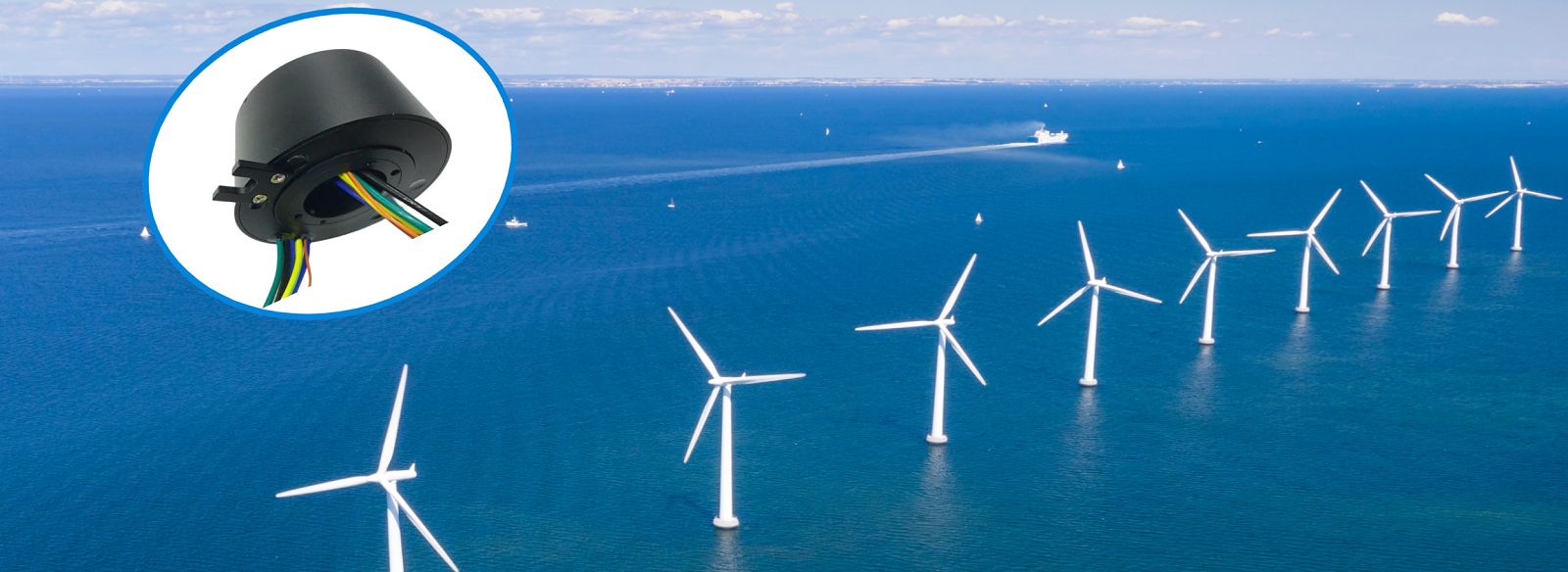
Offshore Wind Turbine Slip Rngs
Offshore wind turbines operate in one of the harshest environments, exposed to high humidity, salt spray, constant vibration, and large temperature fluctuations. In such conditions, offshore slip rings are responsible for transmitting power and signals between the rotating nacelle and the stationary tower, where reliability becomes a major challenge. In this article, we'll explore what affects slip ring reliability in offshore wind applications and the solutions
Why Offshore Slip Rings Face Extreme Challenges?
Unlike onshore turbines, offshore systems face continuous exposure to salt-laden air, condensation, and strong vibration caused by sea winds. Over time, these conditions accelerate corrosion, contact wear, and insulation degradation. Common reliability issues include:
• Oxidation of contact surfaces leading to signal loss
• Saltwater intrusion is damaging internal components
• Increased friction and torque under temperature variation
• Electrical noise disrupting data transmission
To build a durable slip ring for offshore turbines, slip ring manufacturers often choose to optimize the element from material selection to sealing and contact design.

Key Factors Affecting Slip Ring Reliability and How to Solve Them
To ensure the stable operation of slip rings in offshore wind turbines, we need to understand what environmental challenges they face and design a dedicated rotation transmission solution for them. ByTune addresses each with targeted engineering solutions:
|
Factor |
Challenge / Problem |
ByTune Solution |
Reliability Impact |
|
Material Selection |
Contacts can corrode or oxidize in a marine environment |
Gold-to-gold contacts, marine-grade aluminum housings, nickel-plated components |
Reduces oxidation and corrosion, ensuring stable electrical transmission |
|
Sealing and Protection |
Moisture, salt spray, and dust intrusion |
IP65+ protection rating, double-sealed structure with O-rings |
Prevents water and salt ingress, extends service life under continuous offshore exposure |
|
Contact Technology |
Single-point brushes wear quickly under vibration |
Multi-point fiber brush technology provides redundant contact paths |
Maintains low contact resistance, reduces electrical noise, and ensures signal stability for control systems |
|
Insulation and Dielectric Strength |
High voltage fluctuations may cause short circuits |
High-dielectric-strength insulation materials |
Prevents electrical breakdown, ensures safe operation during voltage spikes |
|
Maintenance Accessibility |
Offshore maintenance is costly and weather-dependent |
Modular and compact design allowing quick inspection or replacement |
Minimizes downtime, simplifies maintenance, and reduces operational costs |
|
Testing and Certification |
Performance may fail under real-world environmental stress |
IEC 60068 environmental tests, salt spray, vibration endurance |
Verifies durability and long-term reliability, builds confidence for offshore deployment |
ByTune's approach combines material selection, advanced sealing technology, contact design, and so on. Together, these measures ensure slip rings can withstand the demanding conditions of offshore wind turbines.
ByTune Provides Custom Slip Rings for Offshore Wind Turbines
When it comes to offshore wind turbines, no single design fits all. ByTune provides a range of custom-engineered slip ring models, each optimized for different turbine capacities and applications. Here are four representative models:
|
Images |
|
|
|
|
|
Model |
||||
|
Features |
● ID 35mm, OD 91mm ● 5 wires, 20A, water proof, long life span, easy installation |
● ID 25mm, OD 86mm, 12 /10A ● 1000Base-T, IP 65, IP66, IP68 optional |
● ID 33mm, OD 92mm ● 30A power and signal, with connectors |
● ID 80mm OD 160mm ● IP 65 or higher |
|
Typical Uses |
For Ferris, robotics, wind turbines. etc. |
For Marine Equipment, Agricultural Machinery, etc... |
For antenna, wind turbine, rotating platform, etc |
For Feeris wheel, port Crane, mining driling, etc.. |


Whether your turbine design requires compact signal transmission or high-current power channels, ByTune delivers tailored slip ring solutions tested in offshore conditions. Contact our engineering team to find the right slip ring configuration for your project.
Tips to Correctly Maintain & Monitor Offshore Slip Rings
Even the most high-quality offshore wind slip rings require proper maintenance to ensure long life, such as:
• Regularly clean the slip ring contacts to prevent oxidation and debris buildup.
• Monitor temperature and humidity before failure.
• Lubricate contact surfaces to reduce friction and wear.
• Keep detailed maintenance logs, predict service intervals, and identify slip ring failure patterns.
• Remote diagnostic tools help with the early detection of electrical noise or resistance change.
By following these preventive steps, you can extend the service life of your slip rings and reduce unexpected downtime.
Conclusion
Offshore slip ring design must withstand salt spray, vibration, and temperature cycles. This depends on the slip ring material, sealing, contact design, insulation, and maintenance accessibility. Leading suppliers like ByTune use gold contacts, marine-grade housings, IP65 sealing, and multi-point brushes to address these factors, reducing wear, corrosion, and electrical noise.
Get a Tailored Offshore Slip Ring Solution from ByTune
ByTune specializes in custom slip ring solutions for offshore wind turbines. From corrosion-resistant materials to modular designs, our products work stably in extreme conditions. Contact us now to learn how we can support your turbine operation.