


Why Buy Hydraulic Slip Ring for Systems?
When you buy hydraulic slip ring components for rotating equipment, you're investing in continuous fluid and power transmission that solves the critical challenge of maintaining hydraulic pressure and electrical signals during 360-degree rotation. They're essential when your system requires both hydraulic operation and uninterrupted rotation without cable tangling or performance degradation.
Preventing Catastrophic Downtime in Rotating Systems
When rotating machinery needs hydraulic power, standard solutions fail. Traditional hoses twist, kink, and eventually rupture-often without warning. A construction excavator losing hydraulic pressure mid-operation doesn't just stop working; it creates safety hazards and repair costs that exceed $15,000 per incident.
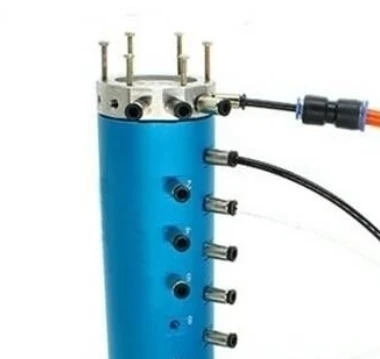
Hydraulic slip rings eliminate this vulnerability through specialized rotary joint technology. The device consists of stationary and rotating sections connected by precision-engineered fluid passages. As components spin, hydraulic fluid flows through sealed channels while electrical signals transmit simultaneously through integrated conductive rings. This dual capability makes them irreplaceable in applications where both hydraulic power and data transmission must persist during continuous rotation.
The technology handles pressures up to 250 bar in industrial applications. Materials including stainless steel, aluminum, and brass withstand corrosive hydraulic fluids, extreme temperatures from -30°C to +80°C, and harsh environmental conditions that destroy conventional solutions. High-quality seals prevent leakage even after millions of rotations, with properly maintained units achieving operational lifespans exceeding 10 million cycles.
Solving the Hybrid Transmission Problem
Most rotating equipment requires multiple forms of energy transmission. A wind turbine blade pitch system, for example, needs hydraulic fluid for adjustment mechanisms, electrical power for sensors, and data signals for monitoring. Running separate systems for each requirement multiplies failure points and maintenance complexity.
When you buy hydraulic slip ring systems with hybrid capabilities, you integrate all three functions into a single compact assembly. Modern units combine 1-16 hydraulic passages with 2-200 electrical circuits, transmitting compressed air at 100 bar while simultaneously carrying high-speed data signals and power up to 440V DC. This consolidation reduces installation time by approximately 40% compared to separate component systems and cuts maintenance overhead through centralized servicing.
The electrical portion uses fiber brush or precious metal contact technology for signal integrity. Unlike carbon brushes that generate conductive dust and require frequent replacement, fiber brush designs maintain electrical noise below 10 milliohms while supporting rotation speeds up to 300 RPM. The hydraulic section employs sophisticated sealing systems-mechanical seals for high-pressure applications, gap sealing for low-viscosity fluids-matched to specific operating conditions.
Integration quality determines system reliability. Chinese manufacturers including Moflon and Senring offer customizable units starting at $30-80 for standard configurations. Premium integrated solutions from companies like Exxelia reach $285-1,388, justified by aerospace-grade materials and testing protocols that verify performance under shock, vibration, and extreme environmental conditions.
When to Buy Hydraulic Slip Ring Components for Construction Equipment
Excavators represent the clearest case for hydraulic slip rings. The rotating superstructure houses the engine and main hydraulic pump, while the undercarriage contains the drive motors. Without a rotary joint, hydraulic hoses would wrap around the pivot point, limiting rotation to approximately 270 degrees before requiring unwinding.
Hydraulic slip rings enable unlimited continuous swing. The unit mounts at the center of rotation inside the turret, positioning it on the pivot axis. This placement minimizes the rotational radius of fluid passages, reducing stress on seals. Typical excavator applications require 4-8 hydraulic passages for boom, arm, bucket, and swing functions, plus 12-48 electrical circuits for lights, controls, and sensors.
Performance demands in construction equipment are severe. Operating temperatures fluctuate from freezing winter conditions to engine bay heat exceeding 80°C. Contamination from dust, mud, and debris requires IP54 or higher protection ratings. Shock loads during operation subject the assembly to forces that would destroy standard electrical slip rings within hours.
Mining equipment pushes these requirements further. Underground operations demand explosion-proof housings and corrosion resistance to acidic mine water. Flow rates for large hydraulic cylinders reach 200 liters per minute at pressures exceeding 350 bar. Slip rings for these applications use hardened steel housings with ceramic sealing surfaces, accepting the higher initial cost-often $2,000-5,000 per unit-against replacement costs and production losses from unexpected failures.
Maintenance intervals for construction applications typically occur every 2,000 operating hours. Inspections check seal condition, bearing play, and electrical contact quality. When you buy hydraulic slip ring replacement seals, costs range from $200-800 depending on unit size, while complete rebuilds run $1,500-4,000. These figures compare favorably against hose replacement schedules, where each failure incident averages $800 in parts plus 4-6 hours of equipment downtime.
Agricultural Machinery Automation
Modern agricultural equipment increasingly relies on precision control systems. Center pivot irrigation systems span up to 500 meters, rotating continuously while delivering water and nutrients. The pivot point requires both electrical power for drive motors and water supply for distribution-a classic hybrid transmission scenario.
Hydraulic slip rings in irrigation systems handle 2-4 water passages for main supply and chemical injection lines, integrated with 6-12 electrical circuits for motor power, position sensors, and communication systems. Units must withstand outdoor exposure for 15-20 year service lives with minimal maintenance, operating through temperature extremes from -20°C to +50°C.
Agricultural sprayers present different challenges. The boom rotates for field navigation while maintaining consistent pressure across 20-30 nozzles. Hydraulic slip rings deliver chemical solutions at 8-15 bar while transmitting control signals for section shutoff valves. Seal compatibility with aggressive agrochemicals requires specialized materials-Viton or PTFE rather than standard nitrile rubber-adding 30-50% to component costs but preventing premature failure.
The global agricultural machinery sector drives hydraulic slip ring demand, particularly in regions with large-scale mechanization. When manufacturers buy hydraulic slip ring units for agricultural equipment, they prioritize outdoor durability and chemical resistance. Asia Pacific leads adoption, with rapid agricultural mechanization in China and India creating market growth. Manufacturers report agricultural applications now represent approximately 25% of hydraulic slip ring sales, growing at 7.2% annually as farms transition from manual to automated systems.
Marine and Offshore Equipment Reliability
Offshore cranes operate in conditions that destroy conventional equipment. Saltwater exposure, 24/7 operation cycles, and critical safety requirements demand components engineered for extreme reliability. A slip ring failure on a vessel-mounted crane can halt operations costing $100,000+ per day in lost productivity.
Marine-grade hydraulic slip rings use stainless steel or Inconel housings with IP67-IP68 ratings for complete water immersion protection. Seals employ multiple redundant stages-primary mechanical seals backed by secondary lip seals and drainage channels that evacuate any fluid that bypasses primary barriers. This layered approach maintains performance even when individual seal elements begin degrading.
Corrosion resistance extends beyond housing materials to internal components. Precious metal electrical contacts resist salt-induced oxidation that would increase contact resistance in base metal alternatives. Hydraulic passages use electropolished surfaces that prevent rust particle generation-critical because contamination as small as 5 microns can damage downstream hydraulic components.
Offshore wind turbines represent a specialized marine application. Turbine nacelles rotate to track wind direction, requiring multiple hydraulic circuits for yaw brakes and electrical circuits for generator connections, sensors, and communication systems. Slip rings for these applications handle 600-1,000 VDC with currents exceeding 100 amps while simultaneously managing hydraulic passages for brake systems. Units operate continuously for 5-7 years between scheduled maintenance, with target reliability exceeding 99.5% to minimize expensive offshore service interventions.
Testing protocols for marine applications include salt spray exposure for 1,000+ hours, vibration testing at frequencies matching ship engine harmonics, and thermal cycling from -30°C to +60°C. Components passing these qualifications command premium pricing but deliver the proven reliability offshore operations require. Failure rates for properly specified marine slip rings drop below 0.2% annually compared to 3-5% for industrial-grade units exposed to marine environments.
Industrial Automation and Robotics
Multi-axis robotic arms require power, data, and often pneumatic or hydraulic actuation at each joint. As articulation complexity increases, cable management becomes impossible without slip rings. A six-axis robot with hydraulic grippers might need 8 power circuits, 16 signal wires, and 2 hydraulic passages-all crossing rotary joints that execute millions of cycles annually.
Hydraulic slip rings in robotics prioritize compactness and low torque. Additional rotational resistance from slip ring friction affects robot positioning accuracy and speed. Miniature hybrid designs achieve outer diameters below 50mm while integrating 4 media passages with 6-12 electrical rings. Each ring carries 2A at minimal contact pressure, generating torque under 0.1 Nm to avoid impacting robot dynamics.
Precision manufacturing is essential. Runout tolerances below 0.05mm prevent vibration that would damage delicate contacts or compromise seal integrity. Companies that buy hydraulic slip ring components for robotics applications prioritize low-torque designs-bearing selection influences both torque and lifespan, with ceramic hybrid bearings reducing friction while withstanding rapid acceleration/deceleration cycles.
Packaging machinery represents high-volume industrial usage. Rotary filling systems, labeling machines, and palletizers use slip rings to power rotating turrets while maintaining electrical connections for sensors and actuators. These applications demand reliability over 50 million rotations with minimal maintenance, driving adoption of maintenance-free fiber brush technology that eliminates the scheduled carbon brush replacements required in traditional designs.
The global industrial slip ring market, encompassing hydraulic variants, reached approximately $800 million in 2023 with projections to $1.5 billion by 2032-a 7.5% CAGR reflecting automation expansion. Hydraulic-specific segments constitute an estimated $850 million subset growing at 6.5% annually, driven primarily by industrial machinery, construction equipment, and agricultural mechanization.
Critical Selection Criteria When You Buy Hydraulic Slip Ring Systems
Choosing the appropriate hydraulic slip ring requires systematic evaluation across multiple parameters. Undersizing leads to premature failure, while oversizing wastes budget and installation space. Engineers should document requirements across these categories:
Hydraulic Specifications:
Number of passages required (1-24 typically available)
Pressure rating for each circuit (standard units handle 100 bar, specialized versions reach 350+ bar)
Flow rate requirements per passage (affects internal passage diameter)
Fluid type and compatibility (oil, water, coolant, or specialized fluids requiring compatible seal materials)
Temperature range during operation (determines seal material selection)
Electrical Requirements:
Number of circuits needed for power and signals
Voltage levels (AC/DC and maximum values)
Current carrying capacity per circuit
Signal types (analog, digital, high-frequency, or fiber optic)
Noise tolerance and shielding requirements
Mechanical Constraints:
Available installation space (determines physical dimensions)
Through-bore requirements for passing cables or shafts
Rotation speed (RPM rating affects seal design and bearing selection)
Mounting configuration (flange, base, or custom attachment)
Expected lifespan and maintenance intervals
Environmental Factors:
Operating temperature extremes
Exposure to dust, moisture, or chemicals (IP rating requirements)
Vibration and shock levels
Atmospheric conditions (standard, corrosive, or explosive atmospheres)
Material selection fundamentally impacts performance. Stainless steel housings cost 40-60% more than aluminum but provide superior corrosion resistance and structural rigidity for high-pressure applications. Brass components offer good thermal conductivity for heat dissipation but lack the strength for shock-prone installations.
Seal technology determines maintenance cycles and lifespan. Mechanical seals using silicon carbide or tungsten carbide faces achieve 10+ year service lives in clean hydraulic systems but cost $150-400 per passage to replace. Elastomeric lip seals cost $20-50 but require replacement every 2-3 years in demanding applications. Design optimization balances initial investment against lifecycle maintenance costs.
Common Failure Modes and Prevention
Understanding failure mechanisms enables proactive maintenance that multiplies component lifespan. The most frequent issues include:
Seal Degradation: Hydraulic seals degrade through multiple mechanisms. Chemical attack occurs when seal elastomers are incompatible with hydraulic fluids, causing swelling or hardening. Temperature extremes accelerate this process-every 10°C increase doubles chemical reaction rates. Selection of seal materials rated for specific fluid types and operating temperatures prevents this mode.
Wear creates seal surface imperfections that allow fluid bypass. Contamination in hydraulic fluid-particles above 10 microns-acts as an abrasive, cutting seal surfaces. Implementing proper filtration (10 micron or finer) and scheduled fluid analysis identifies contamination before it causes damage. Seal replacement at manufacturer-recommended intervals, typically 2,000-5,000 operating hours, prevents catastrophic leakage.
Electrical Contact Issues: Contact resistance increases as oxidation or contamination coats conductive surfaces. Carbon brush systems generate dust that accumulates on slip rings, creating intermittent connections. Fiber brush and precious metal designs resist this degradation but still require periodic cleaning. Inspection intervals of 1,000 hours with contact surface cleaning using isopropyl alcohol maintain low resistance.
Brush wear eventually requires replacement. Carbon brushes typically last 1,000-2,000 hours depending on current load. Precious metal fiber brushes extend this to 10,000-50,000 hours but cost significantly more. Monitoring electrical noise levels provides early warning-resistance increases above baseline indicate impending brush failure.
Bearing Problems: Bearings support the rotating assembly while maintaining alignment between stationary and rotating sections. Contamination from hydraulic fluid leakage into bearing cavities causes rapid wear. Proper sealing between hydraulic and bearing sections, using labyrinth seals or shaft sleeves, prevents this cross-contamination.
Vibration damages bearings through false brinelling-minute movements under load that create indentations in races. Applications with high external vibration require preloaded bearing arrangements that eliminate internal play. Angular contact bearings or tapered roller bearings resist moment loads better than standard ball bearings in applications with offset loading.
Installation Errors: Misalignment during installation creates binding forces that accelerate wear. Angular misalignment above 0.5 degrees or radial offset exceeding 0.3mm generates uneven contact pressure on seals and bearings. Using precision alignment tools during installation-dial indicators or laser alignment systems-ensures proper geometry.
Overtightening mounting bolts deforms housings, changing critical internal clearances. Torque specifications exist for good reason. Following manufacturer torque values prevents distortion while maintaining proper clamping force. Thread locking compound prevents bolts from loosening during operation without requiring excessive tightening.
Cost-Benefit Analysis
Initial purchase price represents only 20-30% of total ownership cost. A comprehensive analysis accounts for:
Capital Investment: Standard hydraulic slip rings with 4 passages and 12 electrical circuits range from $500-1,500. When you buy hydraulic slip ring units with custom configurations-specialized seals, exotic materials, or high channel counts-prices reach $2,000-5,000. Premium aerospace-grade units exceed $10,000 but deliver reliability levels required for critical applications where failure risks lives or causes catastrophic losses.
Installation Costs: Professional installation requires 4-8 hours for standard applications, with labor costs of $400-800. Complex installations involving custom mounting, alignment, and testing can require 16-24 hours at specialized shops. This one-time expense ensures proper function and prevents warranty issues from incorrect installation.
Operational Benefits: Eliminating hose rotation failures reduces unplanned downtime. Each failure incident averages 4-6 hours of lost productivity plus repair costs. For equipment with hourly operating costs of $150-300 (common in construction and mining), preventing even 2-3 failures annually justifies slip ring investment. Revenue protection often exceeds 10:1 compared to component costs.
Hydraulic slip rings enable design simplifications that reduce system costs elsewhere. Eliminating cable festoons, rotary hose assemblies, and complex cable management hardware can save $1,000-3,000 in related components. Installation time decreases by 30-50% when a single slip ring replaces multiple separate systems.
Maintenance Economics: Scheduled maintenance every 2,000 hours costs $200-500 for inspection, cleaning, and minor adjustments. Seal replacement at 5,000-10,000 hours adds $300-800. Compare this to hose systems requiring replacement every 1,000-2,000 hours at $600-1,200 per incident including labor.
Lifecycle cost analysis over 10 years typically shows hydraulic slip rings delivering 40-60% lower total cost of ownership compared to traditional approaches, driven primarily by reduced downtime and maintenance labor. The financial case strengthens further when accounting for improved reliability and enhanced system capabilities.
Market Dynamics and Technology Evolution
The global hydraulic slip ring market demonstrates robust growth driven by industrial automation expansion. Market size reached approximately $850 million in 2023, with projections to $1.45 billion by 2032 representing 6.5% compound annual growth. Asia Pacific leads regional demand at over 40% market share, reflecting rapid industrialization and infrastructure development in China, India, and Southeast Asia.
North America and Europe maintain substantial market presence due to established industrial bases and ongoing equipment modernization. These regions drive adoption of premium technologies including fiber optic integration for high-speed data transmission and IoT-enabled condition monitoring that enables predictive maintenance strategies.
Technology development focuses on several key areas:
Advanced Sealing Materials: PTFE composites and perfluoroelastomers extend seal lifespans by 30-40% compared to traditional nitrile rubber. These materials resist chemical degradation from synthetic hydraulic fluids and maintain flexibility at temperature extremes. Development costs drive premium pricing, but total ownership costs decrease through extended replacement intervals.
Wireless Power and Data Transmission: Contactless slip ring technology using magnetic field coupling eliminates mechanical wear entirely. Currently limited to lower power levels (under 500W), this approach suits applications where maintenance access is severely restricted. Costs exceed mechanical slip rings by 3-5x, limiting adoption to applications where maintenance expenses justify the premium.
Integrated Sensing: Embedded temperature, pressure, and vibration sensors enable real-time condition monitoring. IoT connectivity allows remote monitoring of slip ring health, with predictive algorithms forecasting maintenance requirements before failures occur. This technology migration follows patterns in other industrial components-initial adoption in premium segments expanding to mainstream applications as costs decrease.
Miniaturization: Compact designs serve robotics and medical equipment where space constraints are severe. Engineering challenges include maintaining adequate flow passages and electrical capacity within reduced envelopes while preserving mechanical strength. Miniature units with outer diameters below 40mm now integrate 4 hydraulic passages with 12 electrical rings-a 50% size reduction from designs available five years ago.
Manufacturers increasingly offer modular platforms allowing field configuration of passage counts and electrical circuits. This flexibility reduces inventory costs while enabling rapid customization. Integration with other rotating components-encoders, RF joints, fiber optic rotary joints-creates complete transmission solutions from single suppliers.
What Successful Implementation Looks Like
A mid-sized construction equipment manufacturer faced persistent hydraulic hose failures on their excavator line. Original design used 8 hydraulic hoses wrapping around the cab rotation point, protected by a spiral guard. Hoses failed every 1,200-1,800 operating hours, requiring 5 hours of technician time per replacement at $1,200 in parts and labor.
They specified a custom hydraulic slip ring with 8 passages rated for 250 bar, integrated with 24 electrical circuits for cab power and control systems. Unit cost was $3,200 installed-roughly 3x the cost of replacing hoses once. However, the slip ring eliminated recurring failures. After 5,000 hours, maintenance consisted of one 2-hour inspection and seal replacement costing $400.
The financial impact was substantial. Over a 10,000-hour equipment life, traditional hose systems would have required 6-8 replacement cycles costing $7,200-9,600. The slip ring total cost including maintenance reached $4,000-a 50% reduction. More importantly, eliminating unexpected downtime improved customer satisfaction and reduced warranty costs by an estimated $15,000 across their equipment fleet.
This pattern repeats across industries. Initial cost barriers and engineering unfamiliarity represent the primary obstacles to adoption. Once organizations experience the reliability benefits and calculate true lifecycle costs, they typically standardize hydraulic slip rings across product lines and retrofit existing equipment during major overhauls.
Frequently Asked Questions
How long do hydraulic slip rings typically last?
Properly maintained hydraulic slip rings achieve 10-20 year service lives with regular seal replacement. Operational lifespan varies with application severity-units in clean industrial environments routinely exceed 15 years, while those in harsh construction or marine applications may require replacement after 7-10 years. Critical factors include contamination control, operating within rated pressure and temperature ranges, and adherence to maintenance schedules.
Can hydraulic slip rings be retrofitted to existing equipment?
Retrofitting is feasible in most cases but requires engineering analysis of mounting provisions, space availability, and system compatibility. Custom adapter flanges may be necessary to interface with existing structures. Hydraulic plumbing must be rerouted to connect to slip ring ports, and electrical circuits require rewiring. Professional installation is recommended to ensure proper alignment and function. Typical retrofit projects require 16-40 hours of engineering and installation time.
What maintenance is required for hydraulic slip rings?
Standard maintenance includes visual inspection every 500-1,000 operating hours checking for leaks, unusual noise, or vibration. Electrical contacts should be cleaned every 1,000-2,000 hours depending on environment. Seal replacement typically occurs every 2,000-5,000 hours for high-usage applications, extending to 5,000-10,000 hours in benign conditions. Bearing lubrication or replacement follows bearing manufacturer specifications, usually 2,000-5,000 hours. Comprehensive maintenance logs help identify developing issues before they cause failures.
How do I select the right pressure rating?
Specify slip ring pressure rating at least 20% above maximum system pressure to provide safety margin. Consider pressure spikes during startup or rapid actuation-these transients can exceed normal operating pressure by 50-100%. Consult with hydraulic system designers to understand actual peak pressures. Higher pressure ratings increase cost and size, so oversizing beyond necessary margins wastes resources. Standard units handle 100-150 bar; high-pressure versions reach 250-350 bar for specialized applications.
Key Considerations:
When you buy hydraulic slip ring components, you solve the fundamental problem of transmitting fluid and electrical power through rotating joints
Applications span construction, agriculture, marine, industrial automation, and robotics where continuous rotation with hydraulic actuation is required
Proper selection requires evaluating hydraulic specifications, electrical needs, mechanical constraints, and environmental conditions
Lifecycle cost analysis typically shows 40-60% savings versus traditional hose systems through reduced downtime and maintenance
Market growth of 6.5% annually reflects expanding automation and mechanization across multiple industries
Advanced technologies including improved sealing materials and integrated sensing systems continue improving performance and reliability