

What is the maximum number of circuits in electric slip rings?
Hey there! As an electric slip rings supplier, I get asked a ton of questions. One question that’s popped up more often than I can count is, “What is the maximum number of circuits in electric slip rings?” Well, let's dig into this topic.
First off, let's understand what electric slip rings are. They're devices that transfer power, electrical signals, or data between a stationary and a rotating structure. They're used in all sorts of applications, from wind turbines to medical equipment, and even in some high - tech toys.
When it comes to the number of circuits in a slip ring, it's pretty much like the lanes on a highway. The more circuits, the more ‘traffic’ (or signals and power) can flow through at the same time. But just like a highway has its limits, so do slip rings.
The maximum number of circuits in electric slip rings can vary widely depending on a few key factors. One of the biggest factors is the design and construction of the slip ring itself.
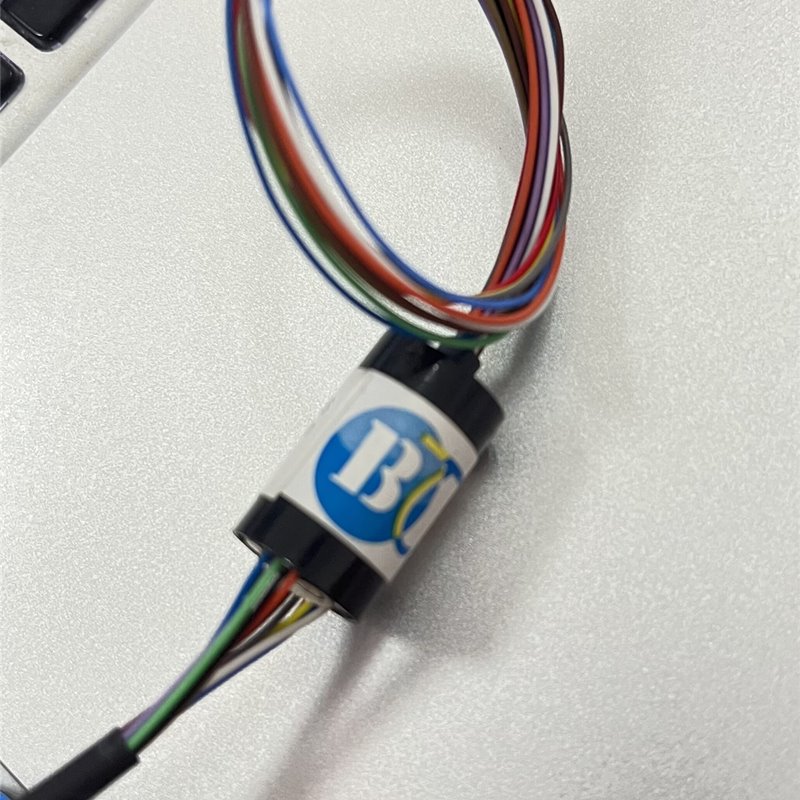
For instance, the size of the slip ring plays a huge role. Smaller slip rings, like the Miniature Through Bore Slip Ring, usually have a lower maximum number of circuits. This is because there's simply less physical space to fit in the contacts and wiring for a large number of circuits. These miniature slip rings are great for applications where space is at a premium, like in some tiny robots or small - scale drones. They might have anywhere from just a couple of circuits to around 20 or so, depending on the exact model and manufacturer.
On the other hand, larger slip rings can accommodate a much higher number of circuits. Take the Through Hole Slip Ring For Satellite Antenna as an example. These are designed for complex and high - end applications where a large amount of data and power needs to be transferred. The bigger size gives engineers more room to stack and organize the circuits. Some of these larger slip rings can have well over 100 circuits. In fact, in some industrial and aerospace applications, slip rings with 200 or even 300 circuits aren't unheard of.
Another factor that affects the maximum number of circuits is the type of signals being transmitted. If you're just dealing with simple electrical power, you might be able to pack more circuits into a given space. But if you're transmitting high - speed data signals or sensitive analog signals, things get a bit trickier.
High - speed data signals are very sensitive to interference. As you add more circuits, the risk of electromagnetic interference (EMI) between the circuits goes up. This can cause signal degradation, errors, and other problems. To minimize EMI, engineers need to use special shielding techniques, keep the circuits separated, and use high - quality materials. All of these things can limit the number of circuits that can be safely packed into a slip ring.
The same goes for sensitive analog signals, like those used in some medical or scientific equipment. These signals can be easily disrupted by noise from other circuits, so extra care has to be taken when designing a slip ring with multiple circuits for these types of applications.
The quality of the materials used in the slip ring also matters. High - grade conductive materials, like gold - plated contacts, offer better conductivity and durability. This can allow for a higher number of circuits because the signal transfer is more reliable. Cheaper materials might start to break down or cause signal issues when you try to cram too many circuits into a small space.
Let's talk about heat dissipation. When a slip ring has a large number of circuits, there's a lot of electrical current flowing through it, which generates heat. If the heat isn't dissipated properly, it can damage the slip ring components and cause signal problems. That's where a High Power Slip Ring With Good Heat Dispersion comes in handy. Slip rings designed with good heat - dissipation features, like heat sinks or fans, can handle more circuits because they can manage the extra heat generated by the increased electrical load.
Now, how does a manufacturer determine the maximum number of circuits for a particular slip ring? It's a combination of engineering know - how and testing. First, the engineers use computer - aided design (CAD) and simulation tools to model the slip ring and predict how it will perform with different numbers of circuits. Then, they build prototypes and test them under real - world conditions. They measure things like signal quality, temperature, and wear and tear on the contacts. Based on the results of these tests, they can determine the optimal and maximum number of circuits for that particular slip ring design.
As a supplier, I often work with customers to find the right slip ring for their specific needs. If a customer is looking for a high - number of circuits, we need to understand their application in detail. Do they need to transmit power, data, or a combination of both? What's the level of signal quality they require? How much space do they have for the slip ring? Based on these answers, we can recommend the best slip ring from our product line or even custom - design a slip ring if necessary.

In conclusion, there's no one - size - fits - all answer to the question of the maximum number of circuits in electric slip rings. It depends on factors like size, signal type, material quality, and heat dissipation. Whether you need a small - scale slip ring with just a few circuits or a large, high - capacity slip ring with hundreds of circuits, we've got the expertise to help you find the right solution.
If you're in the market for electric slip rings and want to discuss your specific requirements, don't hesitate to reach out. We can have a detailed conversation about your needs and figure out the best slip ring option for you. Let's start a conversation and get you the perfect slip ring for your project!
References
- Walker, J. D. (2015). Electrical Contacts: Principles and Applications. Springer
- Dorf, R. C., & Bishop, R. H. (2019). Electrical Engineering Handbook. CRC Press