


How Does USB Slip Ring Transfer Data?
A USB slip ring transfers data through differential signaling across rotating contacts, using twisted-pair wiring that maintains continuous electrical connections between stationary and rotating components. The system preserves USB protocol integrity by carefully managing impedance matching, signal shielding, and contact resistance during 360-degree rotation.
Understanding USB Slip Ring Data Transfer Mechanism
The core of USB slip ring data transfer relies on sliding contact technology combined with differential signal transmission. USB slip rings maintain electrical connections through sliding contacts made of precious metals like gold or silver that brush against conductive rings, enabling continuous rotation without disconnecting the signal path.

The Differential Signal Approach
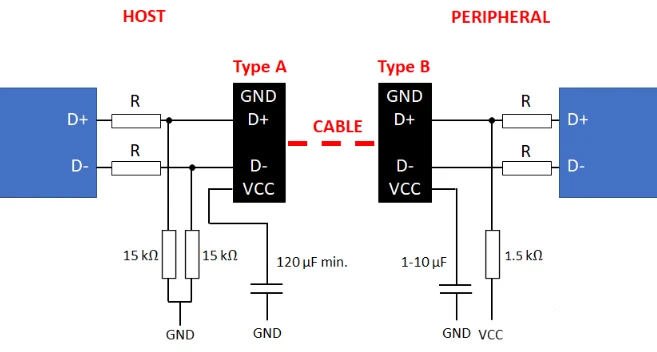
USB protocols inherently use differential signaling, where data travels on two wires (D+ and D-) as complementary signals. The receiver subtracts D- from D+, and if noise affects both wires equally, the subtraction cancels it out. This noise immunity becomes critical in slip ring applications where rotating contacts can introduce electrical interference.
USB 3.0 slip rings support data transfer rates up to 5Gbps using the SuperSpeed USB protocol with duplex communication, allowing data to flow in both directions simultaneously. The physical implementation requires maintaining precise electrical characteristics throughout the rotating interface.
Key Components in USB Slip Ring Data Transfer
Precious Metal Contacts
The contact materials directly impact signal quality. Slip rings use precious metal alloys like gold-plated copper or silver to enhance conductivity, durability, and corrosion resistance. These materials minimize contact resistance variations during rotation, which is essential for maintaining signal integrity.
Monofilament and polyfilament wire brushes made of precious metals like silver, gold, or palladium are common in low-current slip rings needing clean signal transmission and minimal contact resistance. The multi-point contact design ensures at least one brush maintains connection even during vibration or slight misalignment.
Twisted Pair Configuration
Inside the slip ring, USB data wires must maintain their twisted pair configuration. Twisted pair wiring helps suppress noise because the continuous twisting changes the wires' orientation relative to magnetic interference fields. This prevents the wires from forming loops that could pick up electromagnetic interference.
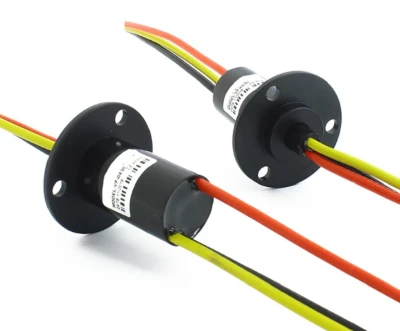
The familiar USB ports are attached to the rotor and stator of the slip ring housing, with the connection remaining relaxed and available at any angle of rotation. The internal wiring preserves the differential pair geometry to maintain the required 90-ohm impedance.
Impedance Matching Requirements
USB signals require precise impedance control for reliable high-speed data transfer. USB data lines should be routed as differential pairs with trace impedance matched to USB cable differential impedance, which is nominally 90 ohms for the signal pair.
Impedance discontinuities throughout the slip ring assembly can cause high-frequency signal losses and degradation due to multiple reflections from impedance mismatches. Quality slip ring manufacturers address this by controlling the axial spacing between conductive rings and maintaining consistent impedance across the rotating interface.
Signal Integrity Challenges and Solutions
Contact Resistance Management
Unlike fixed connections, slip rings have dynamic contact resistance that changes during rotation. High-performance slip rings transfer signals through precious-metal electrical contacts that minimize resistance variations during sliding, with typical values of 20 milliohms causing noise less than 0.2 millivolts.
This low contact resistance is critical because USB 2.0 high-speed mode operates at 480 Mbps with bit times around 2 nanoseconds. Any significant resistance variation would introduce jitter that corrupts the data stream.
Shielding and Crosstalk Prevention
According to USB 2.0 specifications, cables must include a fifth conductor for shielding made of stranded copper braid that surrounds all other conductors and connects to plug shells at both ends. Slip rings maintain this shielding principle through their mechanical design.
Multi-layer shielding and meticulous grounding schemes within the slip ring assembly help prevent electromagnetic interference, while twisted pair routing minimizes loop area for differential data lines. For higher-speed applications like USB 3.0 and beyond, the shielding requirements become even more stringent.
Managing Signal Attenuation
As data rates increase, signal attenuation becomes a significant concern. USB4's 40Gbps signals demand precise impedance control and shielded differential pairs isolated from power lines. The slip ring's rotating contacts must maintain signal integrity across frequencies exceeding 20 GHz.
By twisting differential lines in slip ring designs, the variant differential-mode impedance is stabilized to approximately 115 ohms, improving eye height from 80 mV to 487 mV and eye width from 417.8 picoseconds to 924.8 picoseconds at 1 Gbps data rates.
USB Protocol Standards in Slip Rings
USB 2.0 Implementation
USB 2.0 slip rings are widely used in communication systems for HD video and large storage devices, with the interface being popular and convenient. The 480 Mbps high-speed mode represents the most common implementation for rotating applications.
USB 2.0 slip rings are designed with advantages including reliable transmission, no packet loss, low insertion loss, and contact materials of precious metal with gold plating ensuring abrasion resistance and long working life.
USB 3.0 and Higher Standards
The transition to USB 3.0 marked a significant advancement. USB 3.0 slip rings offer data transfer rates of up to 5Gbps, ten times faster than USB 2.0, with duplex communication allowing simultaneous bidirectional data flow.
Modern USB slip rings support transmission standards including USB 1.0, USB 2.0, USB 3.0, USB 3.1, and USB 3.2 with speeds up to 20Gbps. Each generation requires progressively tighter tolerances for impedance matching, contact resistance, and signal integrity.
USB-C and Power Delivery Integration
USB-C slip rings face additional complexity by combining data and power. USB-C PD 3.1 supports voltages from 5V to 48V at up to 5A, delivering 240W through Extended Power Range. This dual requirement creates engineering trade-offs between robust power transmission and precision data signaling.
Gold-plated contacts are ideal for power delivery due to low resistance (less than 10 milliohms) and oxidation resistance, while specialized coatings like palladium-nickel benefit high-frequency data lines by minimizing signal attenuation at 20GHz+ frequencies.
Technical Specifications and Performance
Data Transfer Rates
Modern USB slip rings accommodate a wide range of data transfer rates:
USB 1.0/1.1: 1.5-12 Mbps (Full-Speed)
USB 2.0: 480 Mbps (High-Speed)
USB 3.0: 5 Gbps (SuperSpeed)
USB 3.1: 10 Gbps (SuperSpeed+)
USB 3.2: 20 Gbps (SuperSpeed++)
USB4/Thunderbolt 4: 40 Gbps
USB slip rings compatible with different USB protocols enable stable and high-speed data transfer rates even with continuous rotating motion. The actual achievable rate depends on the slip ring's electrical design, contact quality, and signal integrity management.
Electrical Performance Metrics
Key electrical specifications include:
Contact Resistance: Typically 20 milliohms or less
Differential Impedance: 90 ohms ±15%
Insertion Loss: Minimized through precious metal contacts
Crosstalk: Controlled through shielding and circuit isolation
Electrical Noise: Less than 6 milliohms in quality designs
High-quality insulating materials such as PTFE or PEEK ensure no crosstalk or short circuits between different data transmission circuits. These materials withstand high temperatures while maintaining exceptional electrical insulating properties.
Rotational Performance
USB 3.0 signal slip rings transmit high-speed signals between stationary and rotating parts in applications requiring real-time data processing, which is critical in automation applications. The mechanical design must support:
Rotation Speed: Up to 250-6000 RPM depending on application
Working Life: 10 million to 100+ million rotations
Operating Temperature: -40°C to +85°C
Protection Rating: IP51 to IP68 (sealed designs)
Applications Requiring USB Slip Ring Data Transfer
Industrial Robotics and Automation
In robotic arms and automated assembly lines, USB slip rings provide smooth transfer of multiple USB signals between stationary and moving parts, enabling uninterrupted communication between cameras, sensors, and control systems.
The continuous rotation capability eliminates cable management issues that would otherwise require complex cable routing or periodic unwinding operations. This is particularly valuable in applications requiring unlimited rotation angles.
Surveillance and Security Systems
Rotating surveillance cameras require reliable data transfer for real-time video transmission, with USB slip rings incorporated to provide uninterrupted video and power transmission while allowing rotation in confined spaces.
Pan-tilt-zoom (PTZ) cameras represent a primary application where USB slip rings enable 360-degree horizontal rotation and 180-degree vertical movement while maintaining continuous high-definition video streams.
Medical Equipment
USB slip rings in medical devices like CT scanners and robotic surgical systems offer uninterrupted power and data for mobile equipment where reliability and performance are critical for correct diagnoses and treatments.
The medical environment demands exceptional reliability, clean signal transmission, and often requires hermetically sealed designs to meet sterilization requirements.
Wind Turbines and Renewable Energy
The wind power industry uses USB slip rings for continuous transmission of signals from the nacelle to stationary parts, making them indispensable for reliable data and power transfer.
Wind turbines require data collection from sensors monitoring blade pitch, vibration, temperature, and power generation metrics-all while the nacelle rotates to face changing wind directions.
Aerospace and Defense
In aerospace applications, USB slip rings are fitted into avionics systems offering uninterrupted data transfer for various applications including sensors and communication devices. Defense applications utilize premium-grade slip rings in robotics and drones where dependable performance under extreme conditions is non-negotiable.
Design Considerations for USB Slip Ring Systems
Environmental Protection
Application environment dictates protection requirements. Work environments with water, dust, and particles require slip rings with sealed enclosures or protective coatings, with IP54 rating meaning resistance to water spray and limited dust exposure, while IP66 and higher protect against water ingress for hazardous jobs.
Encapsulated USB slip rings provide additional protection against harsh environmental conditions like moisture and extreme temperatures through sealed enclosures that safeguard internal components.
Circuit Configuration
The number of circuits in a USB slip ring should correspond with how many electrical signals must be transferred, with more complex systems requiring more circuits to handle additional power and data lines.
Hybrid USB slip rings integrate multiple transmission channels including USB signals, electrical power, and sometimes fiber optics or pneumatic transmissions, allowing simultaneous transfer of USB data alongside other signal types.
Material Selection Trade-offs
Gold's softness accelerates wear in high-speed rotations while specialized coatings may increase contact resistance, leading to composite designs using gold for power contacts and coated alloys for data paths, though this raises costs.
The material choice involves balancing conductivity, wear resistance, oxidation resistance, and cost. Some applications use gold-to-gold contacts throughout for maximum reliability, while others use silver or palladium alloys to reduce costs.
Common Issues and Troubleshooting
Signal Dropout and Intermittent Connection
Connection issues in USB slip rings can result from too high latency times or too much noise in the connection due to cabling, with substantial noise potentially causing device detection failures.
Contact quality degradation over time can introduce resistance variations that exceed the USB protocol's tolerance. Regular inspection and maintenance of brush contacts helps prevent signal dropout issues.
Impedance Mismatch Effects
PTZ cameras using USB 3.2 may drop frames during rotation due to impedance mismatches, creating blind spots in surveillance footage, with the fix being slip rings with embedded equalization circuits to compensate for high-frequency loss.
Proper impedance matching throughout the signal path-from the USB controller through the slip ring to the device-is essential for reliable high-speed data transfer.
EMI and RFI Interference
Rotating slip rings act as antennas picking up noise from motors or wireless devices, with drone 2.4GHz Wi-Fi potentially disrupting USB 3.2 signals. Mitigation strategies include:
Using twisted pair routing to minimize loop area
Implementing conductive gaskets to seal assemblies against external interference
Adding ferrite beads on signal lines
Ensuring proper grounding throughout the system
Vibration and Mechanical Stress
Vibrations in industrial environments cause momentary contact separation that corrupts data packets, requiring USB 3.2 Forward Error Correction or CRC checks to detect and resend lost data.
Applications with high vibration levels benefit from increased brush contact pressure, damping mechanisms, and robust mechanical mounting to maintain consistent electrical contact.
Comparing USB Slip Rings with Alternatives
Cable Management Systems
Traditional cable chains or drag chains allow cable management in moving systems without continuous rotation. However, these systems limit rotation angles and accumulate mechanical stress over time, eventually requiring cable replacement.
USB slip rings eliminate rotation angle limitations and reduce mechanical wear by replacing sliding cable motion with sliding electrical contacts designed specifically for continuous operation.
Wireless Data Transmission
Wireless transmission systems using Bluetooth, Wi-Fi, or infrared can transmit data without physical connections, making them suitable for applications requiring frequent movement, though they may not be ideal for power transmission.
Wireless solutions face challenges including latency, bandwidth limitations, potential interference, and power consumption. USB slip rings provide deterministic, low-latency data transfer with guaranteed bandwidth and simultaneous power delivery.
Fiber Optic Rotary Joints
For the highest data rates with complete EMI immunity, fiber optic rotary joints transmit data optically rather than electrically. These systems excel in environments with severe electromagnetic interference but require more complex alignment and don't inherently transmit power.
Hybrid systems combining fiber optic data transmission with electrical power slip rings offer the best of both worlds for demanding applications requiring both multi-gigabit data rates and substantial power delivery.
Installation and Integration Best Practices
Mechanical Mounting
Proper centering and alignment are critical for slip ring performance. With exact centric positioning, users permanently avoid drilling problems, and installation only requires connecting incoming and outgoing cables with identically marked cables on both sides preventing confusion.
Mounting fixtures should minimize runout and vibration while allowing thermal expansion. Flexible couplings can accommodate minor misalignments without transferring stress to the slip ring bearings.
Electrical Integration
USB slip rings integrate into systems by connecting standard USB cables on both sides. The stationary side typically connects to a host controller or computer, while the rotating side connects to USB devices like cameras or sensors.
Proper grounding is essential. Differential signaling requires a ground reference that runs along the same path as the twisted pair containing D+ and D- signals to ensure both ends maintain the same reference voltage.
Signal Quality Verification
After installation, signal quality testing verifies proper operation:
Eye Diagram Analysis: Confirms adequate eye opening at the receiver
Bit Error Rate Testing: Measures data transmission accuracy
Impedance Measurements: Validates 90-ohm differential impedance
EMI Testing: Ensures compliance with electromagnetic emission standards
Time-Domain Reflectometry (TDR) testing ensures impedance uniformity across soldering joints for USB cables. Similar techniques can validate slip ring impedance characteristics.
Frequently Asked Questions
How fast can USB slip rings transfer data?
USB slip rings support multiple speed grades depending on the USB standard implemented. USB 2.0 slip rings handle 480 Mbps, USB 3.0 reaches 5 Gbps, and advanced USB 3.2 or USB4 implementations achieve 20-40 Gbps. The actual achievable rate depends on the slip ring's design quality, particularly impedance control and contact resistance management.
Do USB slip rings require maintenance?
USB slip rings require no maintenance apart from occasional external cleaning and cannot be dismantled due to their complex and sensitive inner workings. However, contact inspection may be beneficial in high-duty-cycle applications. Typical working life exceeds 10-100 million rotations depending on design and operating conditions.
Can USB slip rings transmit power and data simultaneously?
Yes, USB slip rings inherently transmit both power and data since this is fundamental to USB protocol operation. USB slip rings can transmit power along with data through the rotating interface, with power capacity varying depending on the specific product. USB-C slip rings can deliver up to 240W while maintaining high-speed data transmission.
What causes USB signal quality problems in slip rings?
Signal degradation typically results from impedance mismatches, excessive contact resistance, inadequate shielding, or vibration-induced contact interruptions. High-quality slip rings address these issues through precious metal contacts, impedance-controlled design, comprehensive shielding, and robust mechanical construction. Environmental factors like EMI, temperature extremes, or contamination can also impact performance.
Selecting the Right USB Slip Ring
Application Requirements Analysis
Define critical parameters before selection:
USB Standard: USB 2.0, 3.0, 3.1, 3.2, or USB4
Data Rate: Actual throughput requirements
Power Requirements: Voltage and current for attached devices
Rotation Speed: Maximum RPM needed
Environmental Conditions: Temperature, moisture, vibration
Size Constraints: Available mounting space
Rotation Type: Continuous or limited angle
Additional Circuits: Power lines, other signals
Quality Indicators
High-quality USB slip rings demonstrate:
Precious metal contacts (gold or silver)
Specified impedance matching (90 ohms ±15%)
Low contact resistance (<20 milliohms)
Comprehensive shielding design
Environmental sealing appropriate to application
Documented electrical performance specifications
Compatibility testing with target USB devices
Manufacturer technical support and customization capabilities
Cost-Performance Balance
High-precision machining required for tight impedance tolerances in USB4 increases production costs by 30-50%, while mass production using cheaper stamped contacts or molded housings risks signal integrity through crosstalk in unshielded designs.
Applications not requiring the highest data rates can use more economical USB 2.0 slip rings, reserving premium USB 3.x or USB4 slip rings for applications where the higher speeds justify the additional cost.
Understanding the specific data transfer mechanism in USB slip rings helps engineers select appropriate components and troubleshoot issues effectively. The combination of differential signaling, precision mechanical design, and careful electrical engineering enables these devices to maintain reliable high-speed data connections across rotating interfaces in diverse applications from industrial automation to medical equipment.