


Can Standard Capsule Slip Ring Be Customized?
Yes, a standard capsule slip ring can be customized in most cases. Manufacturers typically modify standard models to meet specific circuit counts, voltage and current ratings, mounting configurations, environmental protection levels, and signal types. The extent of customization depends on the base design and manufacturer capabilities.
Understanding Standard vs. Custom Capsule Slip Rings
The line between "standard" and "custom" in capsule slip rings is more flexible than many engineers realize. Most manufacturers maintain standard product lines with fixed outer diameters ranging from 6.5mm to 60mm and circuit counts from 2 to 72 channels. However, these standard platforms serve as starting points rather than rigid limitations.
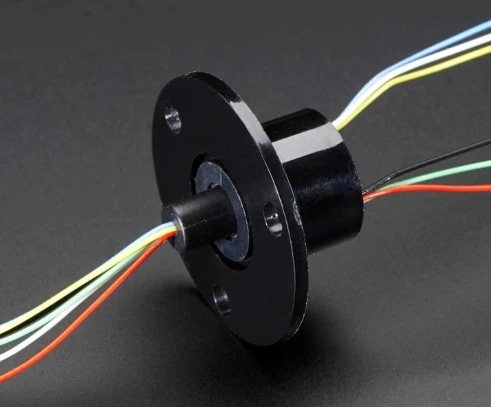
Standard capsule slip rings come with predetermined specifications: gold-on-gold contacts for signal reliability, specific current ratings per circuit (commonly 1A, 2A, 5A, or 10A), and set rotation speeds. A typical 12.5mm capsule might offer 6 circuits at 2A per circuit with a maximum speed of 300 RPM. These units ship quickly-often within days-and cost considerably less than fully engineered solutions.
The distinction matters because approximately 60% of capsule slip ring sales involve some degree of customization. This statistic from major manufacturers reveals that most applications require at least minor modifications to standard designs. The question isn't whether customization is possible, but rather what level of modification your application needs and at what cost.

Common Customization Options for Standard Capsule Slip Rings
Circuit Configuration Modifications
Circuit adjustments represent the most frequent customization request. While a standard capsule slip ring might offer 12 circuits at 2A, manufacturers can reconfigure this to 8 circuits at 5A or 6 circuits at 10A within the same housing. This flexibility stems from the modular internal architecture where ring spacing and brush assemblies can be redesigned without changing the external envelope.
Mixed circuit configurations provide even greater versatility. A single capsule can integrate different current ratings-for instance, 4 power circuits at 10A alongside 8 signal circuits at 2A. This heterogeneous approach eliminates the need for multiple slip rings in systems requiring both power transmission and data signals.
Signal type integration has become increasingly sophisticated. Modern capsule slip rings can be internally modified to handle Ethernet (100Mbps to 1Gbps), USB 2.0/3.0, HD-SDI video signals, CAN bus, RS-485, and fiber optic channels within a compact package. Each signal type requires specific impedance matching and shielding, which manufacturers incorporate during the customization phase.
Mechanical and Mounting Adaptations
Flange customization addresses mounting challenges in existing assemblies. Standard capsules typically feature an A-type flange with a fixed diameter and bolt pattern. Custom modifications include changing flange dimensions, altering the number and position of mounting holes (pitch circle diameter adjustments), flange thickness variations, or complete flange removal for direct press-fit installations.
Lead wire specifications significantly impact installation efficiency. Standard units ship with 225mm leads using 26-30 AWG wire. Customization options include extended lead lengths up to 1000mm or more, specific wire gauges matched to current requirements, color-coding schemes that align with existing system conventions, heat-shrink tubing for strain relief, and pre-installed connectors ranging from simple terminal blocks to specialized military-grade circular connectors.
Through-bore modifications transform solid-shaft capsules into units capable of accommodating fluid lines, fiber optics, or additional mechanical components. While standard capsules use solid rotors, manufacturers can machine central bores ranging from 2.5mm to 10mm diameter without substantially increasing the external dimensions.
Environmental and Protection Enhancements
Protection class upgrades prove essential for harsh environments. Standard capsule slip rings typically carry IP51 ratings (protection against dust and dripping water). Customization elevates this to IP54 (dust protected, splash resistant), IP65 (dust tight, water jet resistant), IP67 (dust tight, immersion resistant to 1 meter), or even IP68 (dust tight, continuous immersion beyond 1 meter).
Temperature range expansion accommodates extreme operating conditions. Standard units function within -20°C to +60°C. Military-grade customizations extend this to -40°C to +85°C or even -55°C to +125°C for aerospace applications. These modifications involve upgraded bearing lubricants, temperature-resistant housing materials, and contact materials that maintain conductivity across temperature extremes.
Material substitutions address specific environmental challenges. Engineering plastic housings can be replaced with aluminum alloy for better heat dissipation or stainless steel for corrosive environments. Gold plating thickness can be increased from standard 3-5 microns to ultra-thick 10-15 micron layers for extended wear life in high-cycle applications.
Electrical Performance Modifications
Voltage rating adjustments respond to application-specific power requirements. Standard capsules handle up to 240VAC/DC. Customizations can reduce insulation spacing for ultra-low voltage applications (3.3V, 5V logic levels) to minimize size, or conversely, increase ring-to-ring spacing and insulation thickness for high-voltage applications up to 600V or 1000V.
Electrical noise reduction becomes critical in sensitive signal transmission. Standard capsules specify noise levels around 10-50 milliohms peak. Advanced customizations incorporate EMI/RFI shielding in the housing, twisted-pair lead wire configurations, individual circuit screening, and upgraded brush materials (silver-graphite or precious metal composites) that reduce contact resistance fluctuation to below 5 milliohms.
Speed ratings can be pushed beyond standard specifications. While typical capsules operate at 250-300 RPM continuously, custom bearing selections and dynamic balancing allow operation up to 600 RPM, 1000 RPM, or in specialized cases, 6000 RPM for high-speed robotics and aerospace applications.
The Customization Process and Timeline
Initial Requirements Assessment
The customization journey begins with detailed specification documentation. Engineers must define the complete electrical profile: number of circuits required, current and voltage per circuit, signal types (power, analog, digital, high-frequency), impedance requirements for data signals, and expected electrical noise tolerance. Mechanical parameters include outer diameter constraints, length limitations, mounting interface details, shaft diameter and type, and rotation speed requirements.
Environmental conditions heavily influence design decisions. Operating temperature range, humidity exposure, presence of corrosive chemicals, vibration profiles, shock resistance needs, and ingress protection requirements all drive material selection and sealing strategies. Many customization projects fail to meet expectations because these environmental factors were incompletely specified during initial discussions.
Design and Engineering Phase
Standard modifications typically require 1-2 weeks for engineering review and drawing approval. These involve straightforward changes like circuit reconfiguration, lead length adjustments, or flange modifications. Manufacturers draw from their library of thousands of previous custom designs, making adaptation relatively quick.
Moderate customizations span 3-4 weeks, encompassing mixed signal types, protection class upgrades, through-bore additions, or custom connector integration. Engineers must perform electrical calculations to verify current density, thermal analysis to ensure adequate heat dissipation, and mechanical simulations to confirm structural integrity.
Complex customizations extend to 6-10 weeks or more. These projects involve entirely new form factors, integration of sensors or encoders, hybrid slip ring and rotary union combinations (for simultaneous electrical and fluid transmission), or specialized materials for radiation, cryogenic, or ultra-high temperature environments. Prototype builds and testing cycles account for much of this timeline.
Cost Considerations
The financial impact of customization varies dramatically based on modification scope. Minor adjustments add 15-30% to standard unit costs. A standard 12.5mm capsule costing $45 might rise to $50-60 with custom lead lengths and flange modifications. These changes leverage existing manufacturing processes with minimal tooling investment.
Moderate customizations increase costs by 50-150%. Circuit reconfigurations, protection upgrades, and custom connectors require specialized components and additional assembly time. A standard $80 unit could become $120-200 after these modifications. However, this still represents significant savings compared to full custom engineering.
Extensive customizations can cost 3-5 times more than standard units, potentially reaching 10 times for extremely specialized applications. Custom designs incur non-recurring engineering (NRE) fees ranging from $2,000 to $15,000 depending on complexity. Amortizing NRE across production volumes becomes crucial-a $5,000 engineering fee seems reasonable for 500 units ($10/unit) but prohibitive for 10 units ($500/unit).
Lead time adds another cost dimension. Standard units ship within days. Custom modifications extend this to 2-6 weeks typically, with rush options available at premium pricing. Complex designs requiring 10-12 weeks impact project schedules and may necessitate interim solutions.
Limitations and When Full Custom Design Is Necessary
Physical Constraints of Standard Platforms
Outer diameter represents a hard constraint. If your application envelope allows only 8mm but requires 18 circuits at 5A each, no amount of customization to standard 8mm capsules will work-they physically cannot accommodate that many rings and brushes. Standard platforms have maximum circuit densities that cannot be exceeded without redesigning the entire architecture.
Current density limitations similarly create boundaries. Each circuit requires adequate brush contact area and ring width to handle specified current without excessive heating or wear. Attempting to push a 2A-rated standard design to handle 15A per circuit will result in rapid failure regardless of other modifications.
Through-bore constraints apply when central passages are required. Standard solid-shaft capsules can typically accommodate bores up to about 20% of the outer diameter. Beyond this, the remaining wall thickness becomes structurally insufficient. Applications needing larger central passages require through-hole slip ring designs rather than customized capsule platforms.
Signal Integrity Boundaries
High-frequency signals impose strict requirements that standard capsule architectures may not support. While customization can add Ethernet or USB channels to standard designs, attempting to transmit signals above 3 GHz generally requires purpose-built slip rings with controlled impedance, specialized dielectric materials, and coaxial contact structures not present in standard capsules.
Crosstalk between adjacent circuits becomes problematic when mixing high-power and sensitive signal lines within compact capsules. Although shielding modifications help, physical proximity of circuits in standard designs limits achievable isolation. Applications requiring more than 60dB isolation between channels often need custom architectures with greater ring spacing.
When to Choose Full Custom Engineering
Regulatory compliance for medical devices, aerospace, or military applications may mandate design documentation, material traceability, and validation testing that exceeds what modified standard units can provide. FDA Class II/III medical devices, DO-160 aerospace equipment, and MIL-STD military hardware typically require fully custom designs with complete qualification programs.
Integration with proprietary systems sometimes necessitates custom mechanical interfaces, embedded electronics (rotary encoders, temperature sensors, wireless power transfer), or hybrid solutions combining slip rings with other rotary components. These integrated assemblies go beyond "customized standard" into true custom engineering territory.
Ultra-long life requirements can justify custom development. Standard capsule slip rings offer 50-100 million rotations typically. Applications requiring 500 million rotations or 20+ year service lives may benefit from custom designs optimizing every component for maximum longevity, despite the higher initial investment.
Selecting the Right Manufacturer for Customization
Evaluating Customization Capabilities
A manufacturer's modification range indicates their flexibility. Ask about their smallest and largest customization projects. Companies that only modify existing catalog items lack the engineering depth for significant changes. Look for manufacturers with in-house design teams, machine shops, and test facilities-these capabilities enable true customization rather than just assembly variations.
Previous experience in your industry matters significantly. A manufacturer with aerospace slip ring experience understands vibration testing, outgassing requirements, and qualification documentation. One focused on industrial automation may lack this specialized knowledge. Request case studies or references from similar applications.
Design support quality varies widely. Top-tier manufacturers assign application engineers who actively participate in requirement analysis, propose alternative solutions, and identify potential issues before manufacturing. Budget suppliers simply execute your specifications without engineering input, placing optimization burden entirely on you.
Communication and Documentation Standards
Clear specification formats prevent misunderstandings. Manufacturers should provide detailed customization forms or questionnaires covering electrical, mechanical, and environmental parameters. Ambiguous specifications lead to iterations, delays, and products that don't meet needs.
Drawing approvals before manufacturing represent a critical checkpoint. Reputable manufacturers generate detailed mechanical drawings and electrical schematics for customer review and formal sign-off. This step catches dimensional interferences, connector incompatibilities, and specification misunderstandings before expensive manufacturing begins.
Test reports and certifications validate performance. For customized units, request test data confirming electrical noise, insulation resistance, dielectric strength, rotational torque, and any special parameters (temperature cycling, vibration, etc.). Without documented testing, you're accepting on faith that modifications meet specifications.
Balancing Cost and Quality
Lowest cost rarely delivers best value in customized slip rings. Ultra-cheap units often use inferior materials (brass rings instead of coin silver, standard graphite instead of precious metal composites) that degrade rapidly in service. Calculate total cost of ownership including expected maintenance, replacement frequency, and downtime costs rather than just purchase price.
Prototype validation before production commitments mitigates risk for significant customizations. Ordering 1-3 evaluation units allows testing in your actual system, verifying mechanical fit, confirming electrical performance, and assessing build quality. This $200-500 investment prevents discovering problems after committing to 100+ production units.
Volume negotiations become possible with larger quantities. For 50+ units, request volume pricing or tooling amortization discussions. Manufacturers may waive or reduce NRE fees when guaranteed production volumes justify the engineering investment. Annual forecasts enable even better pricing when manufacturers can schedule production efficiently.
Frequently Asked Questions
What's the minimum order quantity for customized standard capsule slip rings?
Most manufacturers accept customization orders starting at 1-10 units, though this significantly increases per-unit cost due to engineering time allocation. Order quantities of 50-100+ units typically offer the best value proposition for customized designs.
How much does customization typically add to the base price?
Minor modifications (lead lengths, flange changes) add 15-30% to standard pricing. Moderate changes (circuit reconfiguration, protection upgrades) increase costs by 50-150%. Extensive customizations can cost 3-5 times standard pricing plus potential NRE fees of $2,000-15,000.
Can I get customization drawings before committing to purchase?
Reputable manufacturers provide preliminary drawings after requirement discussions, often at no charge for straightforward modifications. Complex customizations may require a nominal engineering fee ($200-500) refundable against production orders. Always request and approve detailed drawings before authorizing manufacturing.
What happens if the customized slip ring doesn't work in my application?
Clarify responsibility before ordering. If specifications were accurately provided and the manufacturer delivers a compliant product, responsibility lies with the specification. If the unit fails to meet agreed specifications, reputable manufacturers will rework or replace it. This makes prototype testing crucial for significant customizations.
Closing Thoughts on Customization Decisions
The practical reality of standard capsule slip ring customization sits between two extremes. It's neither as simple as ordering off-the-shelf products with instant availability, nor as complex as designing entirely new electromechanical systems from first principles. Most applications fall into a middle ground where thoughtful modifications to standard platforms deliver precisely what's needed without the cost and delay of full custom engineering.
Success hinges on accurate requirement definition, choosing manufacturers with appropriate capabilities, and realistic expectations about timelines and costs. The 60% of applications requiring some customization suggest that these units serve more as customizable platforms than fixed products. Understanding this flexibility allows engineers to optimize designs without unnecessary compromise or expense.