

Yo! I'm a supplier of signal slip rings, and today I wanna chat about how the frequency range affects the application of a signal slip ring.

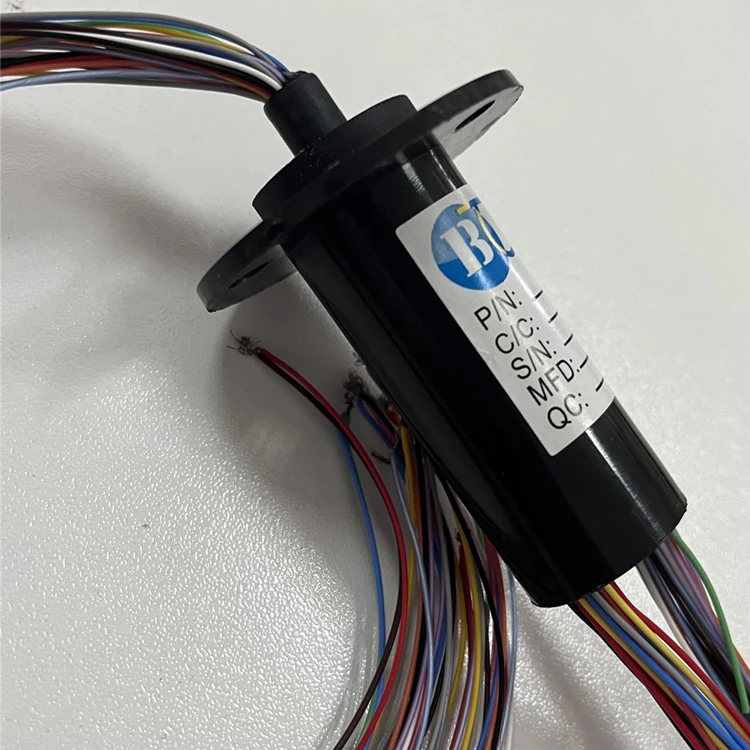
First off, let's get the basics straight. A signal slip ring is a nifty device that transfers electrical signals between a stationary and a rotating part. It's used in a whole bunch of industries, from aerospace to robotics. And the frequency range of a signal slip ring is super important because it determines what kind of signals the slip ring can handle.
Low - Frequency Signal Slip Rings
When we're talking about low - frequency signal slip rings, typically we're looking at frequencies below 10 kHz. These are great for applications where you need to transfer simple signals like analog control signals or low - speed data.
For example, in some industrial automation setups, you might have a robotic arm that needs to receive basic control signals to move in a certain direction. A low - frequency signal slip ring can easily handle these signals without any issues. The design of low - frequency slip rings is usually less complex, which means they're often more affordable. This makes them a popular choice for cost - sensitive projects.
One of the key advantages of low - frequency slip rings is their reliability. Since they're dealing with relatively simple signals, there's less chance of interference or signal degradation. However, they're not suitable for high - speed data transfer or applications that require the transmission of complex signals.
Medium - Frequency Signal Slip Rings
Medium - frequency signal slip rings operate in the range of 10 kHz to 1 MHz. These are a bit more versatile than low - frequency ones. They can handle more complex signals, such as some types of digital data and audio signals.
In the entertainment industry, for example, a rotating stage might use a medium - frequency signal slip ring to transfer audio signals from the stationary sound system to the rotating parts of the stage. The slip ring needs to be able to transmit clear audio without any significant loss of quality.
Medium - frequency slip rings require a bit more sophisticated design compared to low - frequency ones. They need to have better insulation and shielding to prevent interference. But they still offer a good balance between performance and cost, making them suitable for a wide range of applications.
If you're looking for a medium - frequency option, our [Standard Gold Contacting Capsule Slip Ring](/capsule - slip - ring/btc012.html) is a great choice. It's designed to provide reliable signal transfer in the medium - frequency range and has a solid reputation in the market.
High - Frequency Signal Slip Rings
Now, let's talk about the high - frequency signal slip rings, which operate at frequencies above 1 MHz. These are the heavy hitters when it comes to signal transfer. They're used in applications where high - speed data transfer is crucial, such as in radar systems, satellite communication, and high - end medical equipment.
In a radar system, for instance, the slip ring needs to transfer high - frequency signals between the rotating antenna and the stationary processing unit. Any loss or interference in the signal can lead to inaccurate readings. High - frequency slip rings are designed with advanced materials and technologies to minimize signal loss and ensure high - quality signal transfer.
However, these slip rings come with a higher price tag. The manufacturing process is more complex, and they require more precise engineering. But for applications where high - performance is non - negotiable, they're the only way to go.
Our [Capsule Slip Ring More Than 100 Channels](/capsule - slip - ring/btc054.html) is a top - of - the - line high - frequency option. It can handle a large number of channels and high - frequency signals, making it suitable for the most demanding applications.
Ultra - High - Frequency Signal Slip Rings
There's also a category of ultra - high - frequency signal slip rings that operate at frequencies above 10 GHz. These are used in very specialized applications, like millimeter - wave communication systems and some advanced research equipment.
The design and manufacturing of ultra - high - frequency slip rings are extremely challenging. They need to use the latest materials and manufacturing techniques to ensure minimal signal loss and high - speed data transfer. Only a few suppliers in the market can produce these high - end slip rings.
Impact on Different Industries
Let's take a look at how the frequency range of signal slip rings affects different industries:
Aerospace
In the aerospace industry, high - frequency and ultra - high - frequency slip rings are often used. Satellites need to transfer high - speed data between different components, and any signal loss can have serious consequences. Our [Multi - channels Capsule Slip Ring](/capsule - slip - ring/btc035.html) can be a great fit for some aerospace applications, providing reliable multi - channel signal transfer.
Medical
Medical equipment, such as MRI machines and CT scanners, require precise signal transfer. Medium - frequency and high - frequency slip rings are commonly used to ensure that the data collected by the rotating parts of the equipment is accurately transmitted to the stationary processing units.
Robotics
Robotics applications can vary widely in terms of the frequency requirements. Some simple robotic arms might only need low - frequency slip rings for basic control signals, while more advanced robots with high - speed sensors and cameras might require medium - or high - frequency slip rings.
Choosing the Right Frequency Range
When you're choosing a signal slip ring for your application, it's crucial to consider the frequency range carefully. First, you need to determine the type of signals you'll be transferring. If it's simple control signals, a low - frequency slip ring might be sufficient. But if you're dealing with high - speed data or complex signals, you'll need a medium - or high - frequency option.
You also need to think about the budget. High - frequency and ultra - high - frequency slip rings are more expensive, so you need to balance the performance requirements with the cost.
Another factor to consider is the environment in which the slip ring will operate. Harsh environments, such as high - temperature or high - humidity areas, can affect the performance of the slip ring, especially at high frequencies.
Conclusion
In conclusion, the frequency range of a signal slip ring has a huge impact on its application. Different frequency ranges are suitable for different types of signals and industries. Whether you're working on a simple industrial automation project or a high - tech aerospace application, choosing the right frequency range is essential for the success of your project.
If you're in the market for a signal slip ring and need help choosing the right one for your application, don't hesitate to reach out. We're here to assist you with all your signal slip ring needs and can guide you through the selection process. Let's have a chat and see how we can work together to meet your requirements.
References
- "Electrical Slip Ring Technology" by some industry expert (I don't have the exact details right now, but it's a great resource on slip ring technology)
- Various industry whitepapers on signal transmission and slip ring applications.