

Yo, what's up! As a supplier of separate slip rings, I've been getting a lot of questions lately about the electromagnetic interference (EMI) generated by these nifty devices. So, I thought I'd take a few minutes to break it down for you and explain what's going on.
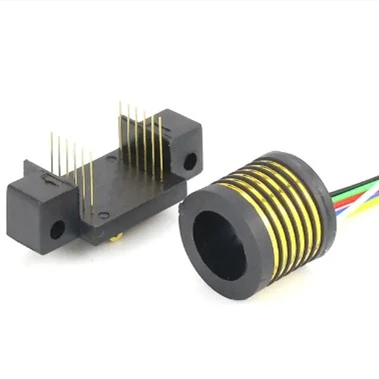
First off, let's talk about what a separate slip ring is. In simple terms, it's a device that allows for the transfer of power and electrical signals between a stationary and a rotating part. This is super useful in all sorts of applications, like wind turbines, robotics, and even in some medical equipment. The separate design means that each circuit is isolated from the others, which can help reduce interference between them.
Now, onto the big question: what is the electromagnetic interference generated by a separate slip ring? Well, EMI is basically any unwanted electrical signal that can disrupt the normal operation of electronic devices. It can come from a variety of sources, both internal and external to the slip ring.
Internal Sources of EMI in Separate Slip Rings
One of the main internal sources of EMI in separate slip rings is the electrical contact between the brushes and the rings. When the brushes make contact with the rotating rings, there can be small sparks or arcing. This arcing creates high - frequency electrical noise, which can radiate out as electromagnetic waves. These waves can then interfere with other nearby electronic components.
Another internal source is the current flowing through the circuits. As current passes through the conductors in the slip ring, it creates a magnetic field. If the current is fluctuating, the magnetic field will also change, and this changing magnetic field can induce unwanted voltages in other circuits within the slip ring or in nearby devices.
External Sources of EMI
External sources of EMI can be just as problematic. For example, nearby electrical equipment like motors, generators, or even power lines can generate strong electromagnetic fields. These fields can couple with the slip ring circuits and induce unwanted currents or voltages.
Radio frequency interference (RFI) is also a common external source. This can come from things like radio transmitters, cell phones, or Wi - Fi routers. The high - frequency signals from these devices can be picked up by the slip ring and cause interference.
How to Reduce EMI in Separate Slip Rings
As a supplier, we're always looking for ways to reduce the EMI generated by our separate slip rings. One of the most effective ways is to use high - quality materials for the brushes and rings. For example, gold - plated contacts are often used because they have low resistance and are less likely to arc. This reduces the amount of electrical noise generated during contact.
We also use shielding techniques to protect the slip ring from external EMI. This can involve wrapping the slip ring in a conductive material, like copper or aluminum, which acts as a Faraday cage. The cage blocks external electromagnetic fields from entering the slip ring and interfering with the internal circuits.
Another approach is to use filtering components. Capacitors and inductors can be added to the circuits to filter out unwanted high - frequency noise. These components can be designed to allow the desired signals to pass through while blocking the interference.
Our Product Range
At our company, we offer a wide range of separate slip rings to meet different customer needs. For those who need a Modular Slip Ring With Flexible Dimension, we've got you covered. This type of slip ring allows for easy customization, so you can adjust the number of circuits and the size according to your specific requirements.
If you're looking for a more standard option, our Standard Gold Contacting Separate Slip Ring is a great choice. The gold contacts provide excellent conductivity and reduce the risk of arcing, which helps to minimize EMI.
And for those who need flexibility in terms of dimension but don't necessarily need a modular design, our Separate Slip Ring With Flexible Dimension is a reliable option. It offers a good balance between performance and customizability.
Importance of Addressing EMI
Addressing EMI in separate slip rings is crucial for the proper functioning of the overall system. In applications like aerospace or medical devices, even a small amount of interference can have serious consequences. For example, in a medical imaging device, EMI could cause artifacts in the images, leading to inaccurate diagnoses.
In industrial applications, EMI can disrupt the control systems of machinery, leading to malfunctions or even safety hazards. So, by reducing EMI in our separate slip rings, we're not only improving the performance of the slip ring itself but also contributing to the reliability and safety of the entire system.
Conclusion
So, there you have it! That's a basic overview of the electromagnetic interference generated by separate slip rings. As you can see, it's a complex issue with both internal and external sources. But with the right design, materials, and techniques, we can effectively reduce the EMI and ensure that our slip rings perform at their best.
If you're in the market for a separate slip ring and want to learn more about how we can help you with EMI issues, don't hesitate to reach out. We're always happy to have a chat and discuss your specific needs. Whether you're working on a small - scale project or a large - scale industrial application, we've got the expertise and the products to meet your requirements. Let's work together to find the perfect slip ring solution for you!

References
- "Electromagnetic Compatibility Engineering" by Henry W. Ott
- "Handbook of Slip Ring Technology" by various authors