

As a supplier of PCB slip rings, I often encounter questions from customers regarding various aspects of these products. One of the most frequently asked questions is whether PCB slip rings generate electromagnetic interference (EMI). In this blog post, I will delve into this topic, exploring the nature of PCB slip rings, the potential for EMI generation, and ways to mitigate such interference.
Understanding PCB Slip Rings
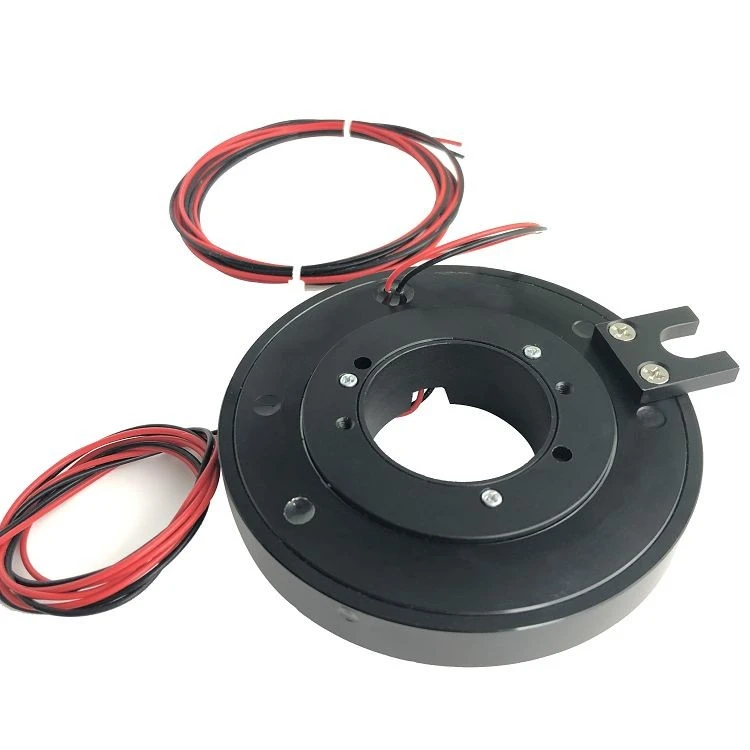
PCB slip rings, also known as printed circuit board slip rings, are a type of electrical connector that allows the transmission of power and electrical signals between a stationary and a rotating structure. They are commonly used in a wide range of applications, including industrial machinery, medical equipment, aerospace systems, and robotics.
The construction of a PCB slip ring involves a printed circuit board with conductive tracks arranged in a circular pattern. These tracks serve as the electrical pathways for the transmission of signals and power. The rotating part of the slip ring, known as the rotor, makes contact with the stationary part, called the stator, through brushes or other contact mechanisms. This allows for continuous electrical connection as the rotor rotates.
The Potential for Electromagnetic Interference
Electromagnetic interference is the disturbance that affects an electrical circuit due to either electromagnetic induction or electromagnetic radiation emitted from an external source. In the context of PCB slip rings, there are several factors that can contribute to the generation of EMI:

Electrical Arcing
When the brushes make contact with the conductive tracks on the PCB, there is a potential for electrical arcing to occur. Arcing is the sudden flow of electric current through a gas, which can generate electromagnetic radiation. This radiation can interfere with nearby electronic components and systems.
High-Speed Signal Transmission
As the demand for higher data transfer rates increases, PCB slip rings are often required to transmit high-speed signals. High-frequency signals can radiate electromagnetic energy more easily than low-frequency signals, increasing the risk of EMI.
Poor Contact Quality
If the brushes do not make proper contact with the conductive tracks, it can lead to intermittent electrical connections. This can result in signal distortion and the generation of EMI.
Mitigating Electromagnetic Interference
While PCB slip rings have the potential to generate EMI, there are several measures that can be taken to minimize its impact:
Shielding
One of the most effective ways to reduce EMI is to use shielding materials. Shielding can be applied to the PCB slip ring itself or to the surrounding components. A shielded slip ring can prevent electromagnetic radiation from escaping and interfering with other devices.
Filtering
Filtering circuits can be added to the PCB slip ring to suppress unwanted electromagnetic signals. These filters can be designed to block specific frequencies or to reduce the overall level of EMI.
Proper Design and Manufacturing
The design and manufacturing process of PCB slip rings play a crucial role in minimizing EMI. By using high-quality materials, precise manufacturing techniques, and proper grounding, the risk of EMI generation can be significantly reduced.
Our PCB Slip Ring Products
At our company, we offer a wide range of PCB slip rings that are designed to minimize electromagnetic interference. Our Reliable Disc Slip Ring is a high-performance product that is suitable for applications where reliability and low EMI are critical. It features a compact design and excellent electrical performance, making it ideal for use in various industries.
Our Thin And Ligth Flat Slip Ring is another popular choice. It is designed to be lightweight and thin, making it suitable for applications where space is limited. Despite its small size, it offers high signal integrity and low EMI.
For those who require a more specialized solution, our Thin And Light Pcb Pancake Slip Ring is an excellent option. It is specifically designed for applications that require a flat and compact slip ring with low EMI.
Conclusion
In conclusion, while PCB slip rings have the potential to generate electromagnetic interference, proper design, manufacturing, and mitigation techniques can significantly reduce this risk. At our company, we are committed to providing high-quality PCB slip rings that meet the needs of our customers while minimizing EMI.
If you are interested in learning more about our PCB slip ring products or have any questions regarding electromagnetic interference, please feel free to contact us. We look forward to discussing your requirements and providing you with the best solutions for your applications.
References
- Grover, F. W. (1946). Inductance Calculations: Working Formulas and Tables. Dover Publications.
- Paul, C. R. (2006). Introduction to Electromagnetic Compatibility. John Wiley & Sons.
- Schmitt, R. L. (1996). Electromagnetic Compatibility Engineering. John Wiley & Sons.