

The marine environment is one of the most challenging settings for electrical and mechanical components due to its high humidity, salt - water exposure, and high - pressure conditions. As a fluid slip ring supplier, I often encounter the question: Can a fluid slip ring be used in a marine environment? This blog post aims to explore this topic in depth, examining the technical aspects, potential applications, and the challenges that come with using fluid slip rings in the marine world.
Understanding Fluid Slip Rings
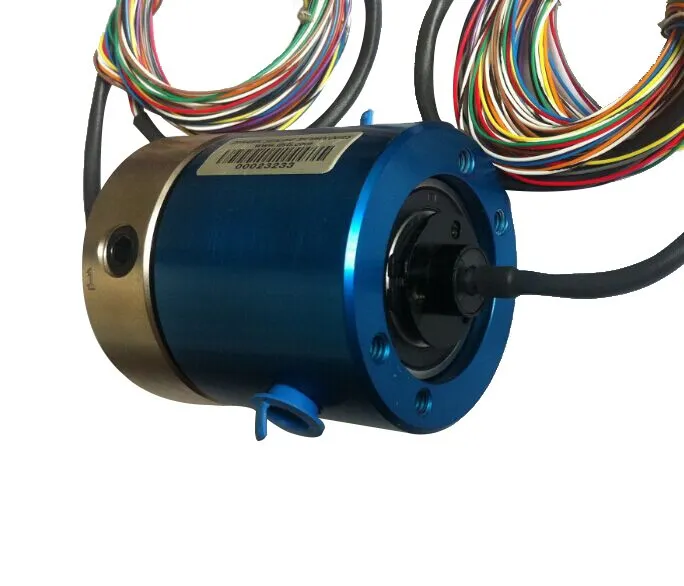
Before delving into the marine applications, let's first understand what fluid slip rings are. Fluid slip rings are electromechanical devices that transfer power, signals, and fluids (such as air, water, or hydraulic oil) from a stationary structure to a rotating one. They are designed to maintain a continuous connection during rotation, enabling the seamless transmission of various media.
There are different types of fluid slip rings, each tailored to specific requirements. For instance, the High Pressure Hybrid Slip Ring can handle high - pressure fluids and electrical signals simultaneously, making it suitable for heavy - duty applications. The Hydraulic Slip Ring with Electrical Wires is designed to transfer hydraulic power along with electrical signals, which is crucial in many industrial and marine applications. And the Pneumatics with Electrical Hybrid Slip Ring combines pneumatic and electrical connections, allowing for more complex operations.
Technical Capabilities and Suitability for the Marine Environment
Corrosion Resistance
One of the primary concerns in a marine environment is corrosion. Saltwater is highly corrosive, and any component exposed to it must be able to withstand this threat. Many of our fluid slip rings are constructed with corrosion - resistant materials such as stainless steel, high - grade polymers, and specialized coatings. These materials prevent the formation of rust and other forms of corrosion, ensuring the long - term reliability of the slip rings. For example, the use of 316L stainless steel in the housing of some slip rings provides excellent resistance to salt - water corrosion, even in harsh marine conditions.
Sealing and Protection
The marine environment often involves exposure to water, whether it's rain, wave splashes, or submersion. Therefore, proper sealing is essential to prevent water ingress into the slip ring. Our fluid slip rings are equipped with high - quality seals, including O - rings and gaskets, which are designed to provide a watertight barrier. Some models are even rated for full submersion, with IP (Ingress Protection) ratings of IP68 or higher. This level of protection ensures that the internal components of the slip ring are shielded from water and moisture, reducing the risk of electrical short - circuits and mechanical failures.
Pressure Resistance
In deep - sea applications, components are subjected to high hydrostatic pressures. Our high - pressure fluid slip rings are engineered to withstand these extreme conditions. They are designed with robust internal structures and pressure - resistant materials that can maintain their integrity under high pressures. For example, the High Pressure Hybrid Slip Ring can operate at pressures up to several hundred bar, making it suitable for deep - sea exploration equipment.
Potential Applications in the Marine Industry
Shipboard Equipment
On ships, fluid slip rings can be used in a variety of applications. For example, they are used in the rotating cranes and winches to transfer hydraulic power and electrical signals. This allows for the smooth operation of these lifting devices, enabling the efficient loading and unloading of cargo. Additionally, fluid slip rings can be used in the ship's radar systems, where they transfer electrical power and data signals to the rotating antenna, ensuring accurate and continuous monitoring of the surrounding environment.
Offshore Platforms
Offshore platforms, such as oil rigs and wind farms, also benefit from the use of fluid slip rings. In oil rigs, fluid slip rings are used in the drilling equipment to transfer hydraulic power and control signals to the rotating drill bits. This enables precise control of the drilling process, even in harsh offshore conditions. In wind farms, fluid slip rings are used in the yaw systems of wind turbines. They transfer electrical power and control signals to the rotating nacelle, allowing the turbine to adjust its position according to the wind direction, maximizing energy production.

Underwater Vehicles
Underwater vehicles, such as remotely operated vehicles (ROVs) and autonomous underwater vehicles (AUVs), rely on fluid slip rings for their operation. These vehicles often require the transfer of electrical power, data signals, and hydraulic or pneumatic fluids to their various sensors, actuators, and manipulators. Fluid slip rings provide a reliable solution for this transfer, enabling the vehicles to perform complex tasks underwater, such as deep - sea exploration, pipeline inspection, and scientific research.
Challenges and Considerations
Maintenance
While fluid slip rings are designed to be reliable, they still require regular maintenance in a marine environment. The seals need to be inspected periodically to ensure they are in good condition and free from damage. The electrical contacts also need to be cleaned to prevent the build - up of corrosion and ensure a low - resistance connection. Additionally, the fluid passages need to be checked for blockages and leaks.
Cost
The cost of using fluid slip rings in a marine environment can be relatively high. This is due to the need for corrosion - resistant materials, high - quality seals, and specialized manufacturing processes. However, it's important to consider the long - term benefits of using reliable components. Investing in high - quality fluid slip rings can reduce the risk of equipment failure, downtime, and costly repairs, ultimately resulting in cost savings over the lifetime of the equipment.
Compatibility
When using fluid slip rings in a marine system, it's crucial to ensure compatibility with other components. For example, the fluid type (hydraulic oil, pneumatic air, etc.) used in the slip ring must be compatible with the rest of the hydraulic or pneumatic system. Similarly, the electrical specifications of the slip ring, such as voltage, current, and signal type, must match those of the connected equipment.
Conclusion
In conclusion, fluid slip rings can indeed be used in a marine environment. Their technical capabilities, including corrosion resistance, sealing, and pressure resistance, make them suitable for a wide range of applications in the marine industry, from shipboard equipment to underwater vehicles. However, it's important to be aware of the challenges and considerations, such as maintenance, cost, and compatibility.
As a fluid slip ring supplier, we are committed to providing high - quality products that meet the demanding requirements of the marine environment. Our team of experts can help you select the right fluid slip ring for your specific application and provide technical support throughout the installation and operation process.
If you are interested in purchasing fluid slip rings for your marine project or have any questions about our products, please feel free to contact us. We are looking forward to discussing your needs and providing you with the best solutions.
References
- "Marine Engineering Handbook" by C. J. Bartson
- "Electromechanical Devices in Harsh Environments" by R. A. Smith
- Technical documentation from our fluid slip ring product lines.