

Introduction
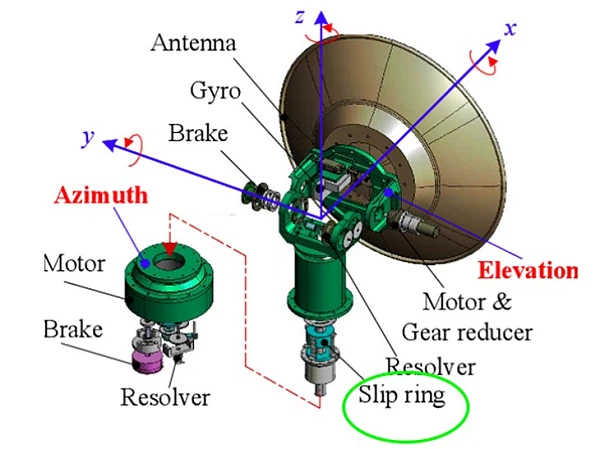
Antennas are devices that capture or transmit electromagnetic waves, from mobile signals to radar or satellite communications. Many modern antennas rotate to cover a wide range or track moving targets, and this creates a challenge: how to transmit power, control signals, and data reliably while the antenna rotates.
This is where antennas slip rings are required. In this guide, we'll explain what slip rings are, how they work in antenna systems, their types, key applications, selection requirements, and practical tips for procurement.
What is a Slip Ring in Antenna Systems?
A slip ring is an electromechanical device that allows continuous 360° rotation of an antenna while transmitting power and signals between stationary and rotating components. Without slip rings, cables would twist, fray, and break over time, especially in systems that rotate frequently or operate in harsh environments.
It functions with:
• Transmit RF signals to and from antennas
• Supply power to active components like amplifiers
• Deliver control signals for beam adjustment and tracking
• Ensure continuous rotation without cable entanglement

How Do They Work?
A typical slip ring includes:
• Conductive Rings: rotate with the antenna shaft
• Brushes: maintain continuous contact with rings
• Bearings and Housing: keep smooth rotation and durability
When the antenna rotates, the brushes transfer electrical signals between the rotating rings and the stationary source. This allows smooth transmission of RF, power, and data signals.
Types of Slip Rings for Antennas
|
Pictures |
Type |
Shape & Features |
Typical Use Case |
|
|
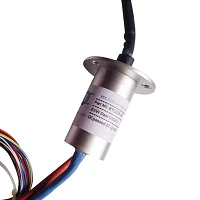
Capsule Slip Ring |
Compact, capsule-shaped. Supports up to 124 channels including HDMI, USB, Ethernet, HD-SDI. |
Indoor wireless access points, small satellite antennas |
|
|
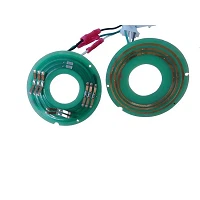
Pancake Slip Ring |
Flat, low-profile. Quieter rotation, suitable for limited vertical space. |
Low-profile rotating platforms, some radar mounts |
|
|
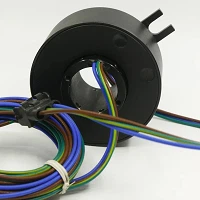
Through-Hole Slip Ring |
Central hole allows shaft and wiring to pass through. Customizable diameters 3–300 mm. |
Large radar, communication antennas, specialized telescopes |
Tip for procurement: check channel count, diameter, and rotation speed against your antenna's requirements.
Applications in Antenna Systems
Communication Antennas
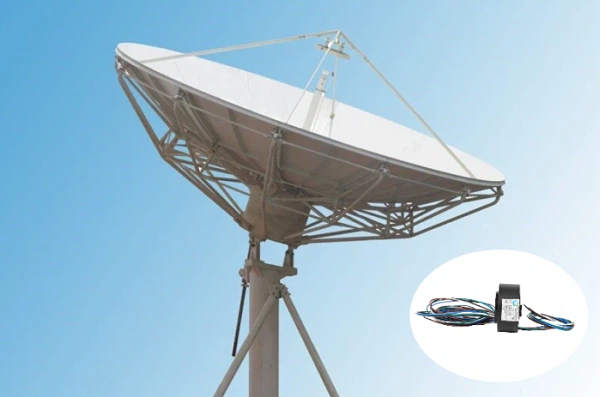
Used in mobile base stations, satellite ground stations, and microwave links, these antennas rely on slip rings to transmit RF signals (700 MHz~2600 MHz) and power active devices. Rotating antennas adjust azimuth and elevation to track satellites and maintain optimal coverage.
Radar Systems
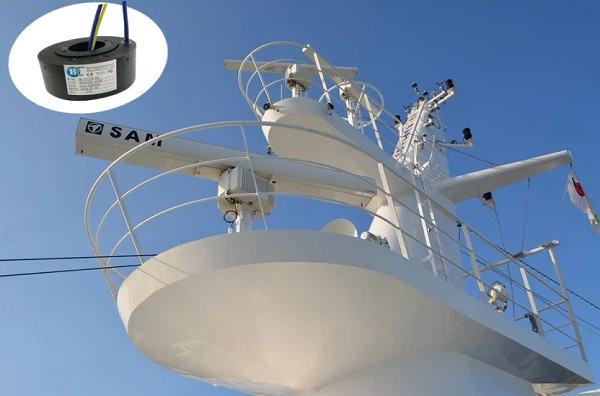
Slip rings are mounted at the radar's rotating base. They transmit RF pulse signals from the transmitter and return weak reflected signals for target detection (ships, aircraft, terrain). Frequency bands typically range from S-band (2–4 GHz) to X-band (8–12 GHz).
Radio Astronomy Telescopes
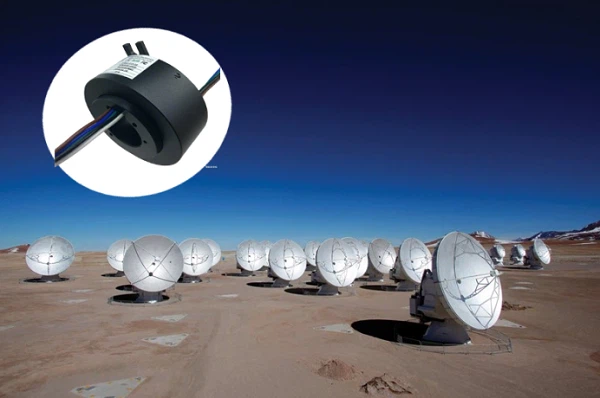
Slip rings near the antenna's rotation axis transmit celestial signals to ground-based processing equipment. They also carry control commands from the observatory to adjust azimuth, elevation, and tracking speed, ensuring precise observation of distant celestial bodies.
Key Benefits of Using Slip Rings
• 360° Continuous Rotation - Eliminates cable twisting and supports full-range detection.
• High Signal Quality - Low contact resistance (≤7 mΩ) and minimal signal attenuation (≤0.1 dB). IP67–IP68 rating ensures performance in harsh environments.
• Multi-Signal Transmission - Supports simultaneous transmission of RF, power, control, and data signals.
• Compact & Customizable Design - Channel count, shape, and size can be adapted to your specific antenna system.

Selection Requirements for Antenna Slip Rings
|
Parameter |
Recommendation / Reason |
|
Error Rate |
<1×10⁻⁶ for digital TV or RF signals to ensure reliable transmission |
|
Anti-Interference |
≥60 dB shielding to prevent electromagnetic interference |
|
Temperature Resistance |
-40°C to 80°C for outdoor or extreme climate operation |
|
Protection Level |
IP67+ for outdoor installations |
|
Rotational Performance |
10–60 rpm continuous rotation; friction torque <0.05 N·m |
|
Communication Protocols |
Compatible with TCP/IP, RS-485, CAN bus, etc. |
Tip: Always cross-check specifications with the antenna's rotation speed, weight, and environmental conditions.
Common Procurement FAQs
Q1: How do I choose the right slip ring for high-frequency antennas?
A: Focus on RF signal integrity, channel count, and shielding. Higher frequency bands require lower signal attenuation and better EMI protection.
Q2: Can slip rings operate in extreme weather?
A: Look for IP67-IP68 rated designs. Consider the temperature range and material for outdoor or marine use.
Q3: Can these slip rings be customized?
A: Yes. Through-hole diameters, channel count, and signal types can be tailored to specific antenna systems.
Q4: Why is electromagnetic interference a concern?
A: Unshielded slip rings may mix or attenuate signals, especially RF, reducing communication reliability. Proper shielding is critical for precision antennas.
Conclusion
That's what we've learned today. Now you know the use, benefits, and requirements of slip rings in antenna systems, etc. Hopefully, this guide will help you choose a slip ring.
Enhance Your Antenna System with ByTune's Slip Rings
If you are still confused, don't worry, ByTune's professional team is always here to help you. We provide professional consultation and custom slip ring solutions tailored to communication, radar, and astronomy antennas. Contact us today to select the optimal slip ring for your project.