

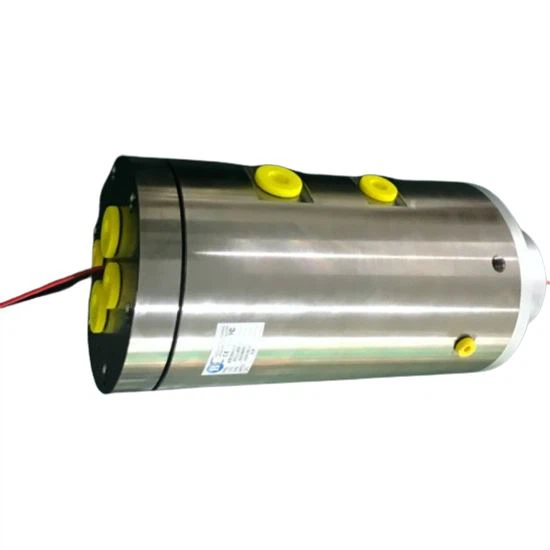
Fluid slip rings are essential components in various industrial applications, allowing for the transfer of fluids (such as hydraulic oil, air, or other gases) between a stationary and a rotating part. One of the critical factors that significantly influence the performance and lifespan of a fluid slip ring is the viscosity of the fluid it handles. In this blog, as a fluid slip ring supplier, I will explore the suitable fluid viscosity range for a fluid slip ring, discuss the impact of viscosity on slip ring operation, and provide some practical guidelines for selecting the appropriate fluid.
Understanding Fluid Viscosity
Viscosity is a measure of a fluid's resistance to flow. It describes the internal friction within the fluid and determines how easily the fluid can be deformed or moved. In simple terms, a high - viscosity fluid is thick and flows slowly, like honey, while a low - viscosity fluid is thin and flows easily, like water.
The viscosity of a fluid is typically measured in centipoise (cP) or pascal - seconds (Pa·s). At room temperature, water has a viscosity of about 1 cP, while engine oil can have viscosities ranging from 10 cP to over 1000 cP depending on its grade.
Impact of Fluid Viscosity on Fluid Slip Rings
The viscosity of the fluid can have several effects on the performance of a fluid slip ring:
Sealing Performance
Seals are a crucial part of a fluid slip ring, preventing fluid leakage between the stationary and rotating parts. High - viscosity fluids can provide better sealing performance as they tend to fill the small gaps between the sealing surfaces more effectively. However, if the viscosity is too high, it may cause excessive stress on the seals, leading to premature wear and potential leakage.
On the other hand, low - viscosity fluids may not form a reliable seal, especially under high - pressure conditions. The fluid can easily leak through the microscopic gaps in the seals, reducing the efficiency of the slip ring and potentially causing damage to other components.
Torque Requirements
The torque required to rotate the slip ring is also affected by the fluid viscosity. High - viscosity fluids create more resistance to flow, which in turn increases the torque needed to rotate the slip ring. This can put additional strain on the motor or other driving mechanisms, leading to increased energy consumption and potential mechanical failures.

Low - viscosity fluids, on the contrary, result in lower torque requirements. However, if the viscosity is too low, it may not provide sufficient lubrication between the rotating and stationary parts, causing increased friction and wear.
Flow Rate and Pressure Drop
Viscosity has a direct impact on the flow rate of the fluid through the slip ring. High - viscosity fluids flow more slowly, which can limit the maximum flow rate that the slip ring can handle. Additionally, high - viscosity fluids experience a higher pressure drop across the slip ring, meaning that more pressure is required to maintain the desired flow rate.
Low - viscosity fluids flow more easily, allowing for higher flow rates and lower pressure drops. But, if the viscosity is extremely low, it may be difficult to control the flow precisely, especially in applications where accurate fluid delivery is required.
Suitable Viscosity Range for Fluid Slip Rings
The suitable viscosity range for a fluid slip ring depends on several factors, including the type of fluid, the operating pressure, the rotational speed, and the specific design of the slip ring.
General Guidelines
In general, for most standard fluid slip rings used in industrial applications, the suitable viscosity range is between 10 cP and 1000 cP. This range provides a good balance between sealing performance, torque requirements, and flow characteristics.
- 10 - 100 cP: Fluids with viscosities in this range are relatively thin and flow easily. They are suitable for applications where high flow rates are required, such as in some pneumatic systems. Our Pneumatics with Electrical Hybrid Slip Ring can handle fluids within this viscosity range effectively, providing reliable transfer of pneumatic and electrical signals simultaneously.
- 100 - 500 cP: This is a common viscosity range for many hydraulic fluids. Fluids in this range offer good sealing performance and moderate torque requirements. They are widely used in hydraulic systems where precise control of fluid flow and pressure is necessary. Our One Channel Hydraulic Slip Ring (BTY - 01D) is designed to work well with hydraulic fluids in this viscosity range, ensuring smooth and efficient operation.
- 500 - 1000 cP: High - viscosity fluids in this range are thick and provide excellent sealing properties. They are suitable for applications where high - pressure sealing is required, such as in some high - pressure hydraulic systems. Our High Pressure Hybrid Slip Ring is specifically designed to handle high - pressure and high - viscosity fluids, offering reliable performance in demanding environments.
Special Considerations
However, these are just general guidelines, and there are some special considerations that may require adjusting the viscosity range:
- Operating Temperature: Viscosity is highly temperature - dependent. As the temperature increases, the viscosity of most fluids decreases. Therefore, in applications where the operating temperature varies significantly, it is important to choose a fluid with a suitable viscosity - temperature relationship. For example, in high - temperature environments, a fluid with a higher initial viscosity may be required to ensure proper sealing and performance at elevated temperatures.
- Rotational Speed: Higher rotational speeds can cause additional shear forces on the fluid, which can affect its viscosity. In high - speed applications, a lower - viscosity fluid may be preferred to reduce the torque requirements and prevent excessive heat generation.
- System Pressure: High - pressure systems require fluids with higher viscosities to maintain proper sealing. However, if the pressure is too high and the viscosity is too low, the fluid may leak through the seals. On the other hand, if the pressure is relatively low, a lower - viscosity fluid can be used to improve the flow characteristics.
Selecting the Right Fluid for Your Fluid Slip Ring
When selecting a fluid for your fluid slip ring, it is important to consider the following steps:
- Understand Your Application Requirements: Determine the operating conditions of your system, including the temperature range, pressure, flow rate, and rotational speed. This will help you narrow down the suitable viscosity range.
- Consult the Slip Ring Manufacturer: As a fluid slip ring supplier, we have extensive experience and technical knowledge. We can provide you with detailed information and recommendations on the suitable fluid viscosity range for your specific slip ring model.
- Test the Fluid: Before full - scale implementation, it is advisable to conduct some tests with the selected fluid to ensure that it meets the performance requirements of your system. This can help identify any potential issues early on and allow for adjustments if necessary.
Conclusion
The viscosity of the fluid is a critical factor that affects the performance and lifespan of a fluid slip ring. By understanding the impact of viscosity on sealing performance, torque requirements, and flow characteristics, and by following the general guidelines and special considerations, you can select the appropriate fluid viscosity range for your application.
As a fluid slip ring supplier, we are committed to providing high - quality slip rings and technical support to our customers. If you have any questions about fluid viscosity or need help selecting the right slip ring for your application, please feel free to contact us for further discussion and procurement negotiation. We look forward to working with you to meet your industrial needs.
References
- Campbell, C. S. (1989). Rheology of Dense Granular Flows. Annual Review of Fluid Mechanics, 21(1), 57 - 92.
- Bird, R. B., Stewart, W. E., & Lightfoot, E. N. (2007). Transport Phenomena. Wiley.
- Incropera, F. P., & DeWitt, D. P. (2002). Fundamentals of Heat and Mass Transfer. Wiley.